TRAM TRAVELS

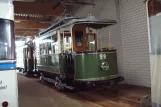
Plauen railcar 25

Operational
Trams from Plauen

Select vehicle type: Articulated trams, grinder cars, low-floor articulated trams, railcars, and sidecars.

Railcars from Plauen

Select vehicle number: 25, 48, 61, 63, 71, 73, 77, 78, 82, and 92.

The history of the tram

Plauener Straßenbahn (PSB)
Operational

: Delivered as Plauen railcar 25, manufacturer Maschinenfabrik Augsburg-Nürnberg (MAN).

Postcard: Gera railcar 29 near Heinrichstraße (2005)Postcard: Gera railcar 29 near Heinrichstraße (2005)1905-2005 100 Years of Motor Car 29 Schülerstraße 1963 as Motor Car No. 25 in Plauen Since 1967 as Motor Car No. 29 in Gera gvb Geraer Verkehrsbetrieb GmbH A company of Stadtwerke Gera AG 100 Years of Historic Motor Car No. 29 Type MAN, built in 1905 Seats: 16 Standing Room: 20 In regular service in Plaun from 1905 to 1966 As a historic tram in Gera since 1967By Geraer Verkehrsbetrieb (GVB), Henrik Boye, Klaus Reichenbach - .

Geraer Verkehrsbetrieb (GVB)
Operational

: Taken over by the company as Gera railcar 29 (ex Plauen railcar 25), manufacturer Maschinenfabrik Augsburg-Nürnberg (MAN).

Postcard: Gera railcar 29 near Heinrichstraße (2005)Postcard: Gera railcar 29 near Heinrichstraße (2005)1905-2005 100 Years of Motor Car 29 Schülerstraße 1963 as Motor Car No. 25 in Plauen Since 1967 as Motor Car No. 29 in Gera gvb Geraer Verkehrsbetrieb GmbH A company of Stadtwerke Gera AG 100 Years of Historic Motor Car No. 29 Type MAN, built in 1905 Seats: 16 Standing Room: 20 In regular service in Plaun from 1905 to 1966 As a historic tram in Gera since 1967By Geraer Verkehrsbetrieb (GVB), Henrik Boye, Klaus Reichenbach - .

Geraer Verkehrsbetrieb (GVB)
Operational

: Rebuilt to Gera museum tram 29 (ex Plauen railcar 25), manufacturer Maschinenfabrik Augsburg-Nürnberg (MAN), type 2-axle trailer car.
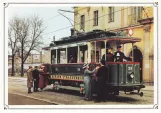
Postcard: Gera museum tram 29 near An der Spielwiese (1992)Postcard: Gera museum tram 29 near An der Spielwiese (1992)Wiesestraße 100 Years of Electric Trams in Gera 1892-1919 Historic Tramcar No. 29 Built in 1905, MANBy Atelier Brühl, Bild und Heimat - Reichbach (Vogtl), Henrik Boye - .

Thüringerwaldbahn und Straßenbahn Gotha
Operational

: Taken over by the company as Gotha museum tram 29 (ex Plauen railcar 25), manufacturer Maschinenfabrik Augsburg-Nürnberg (MAN).
125 Years of Gotha Tram / 90 Years of Thuringian Forest Railway (2019)
11:43
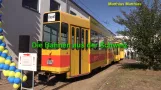
125 Years of Gotha Tram / 90 Years of Thuringian Forest Railway (2019)The first ex-Basel tram has been in regular service for a few days. It took longer than expected because of all the problems the pandemic brought to the world, and German law was also a huge problem. Due to some German laws, they had to do more paperwork than expected and make more modifications. It isn't easy to do all the needed paperwork to convert a Swiss train into a German tram. You need to know that in Switzerland, there are no trams; all vehicles on the railroad are trains. They needed to be converted into a German train (only on paper) and then into a German tram. This was the first time in German history that someone converted an old Swiss "train" into a German tram. All this paperwork took a long time, but now the first one is finished, and all other trains will take only 6 months to finish.By Matthias Matthias - .
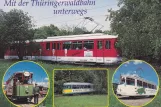
Postcard: On the move with the Thuringian Forest Railway (2006)Postcard: On the move with the Thuringian Forest Railway (2006)By Bild und Heimat, Henrik Boye, Schröder.
.

Geraer Verkehrsbetrieb (GVB)
Operational

: Taken over by the company as Gera museum tram 29 (ex Plauen railcar 25), manufacturer Maschinenfabrik Augsburg-Nürnberg (MAN).

Documentary OnTour Tram Gera (2013)
35:07
Documentary OnTour Tram Gera (2013)Join us on a 35-minute journey on the Gera tram. GVB operates three lines in Thuringia's third-largest city. They use both Tatra vehicles from CKD and Alstom low-floor trams. In addition to the main line 3, which connects the northeast and southwest every five minutes, there are two supplementary lines, 1 and 2, and in the depot, you'll find a few very special vehicles that you wouldn't normally expect to find here... The NVP team welcomes you to our report on Gera's on-tour operations. We are at the Heinrichstraße stop, the central hub of the GVB network. But first, let's get an overview of the entire Gera network. Line 1 connects the districts of Unterm Haus and Zwozen in 10 minutes, stopping at 13 locations along a 20-minute route. Usually, only low-floor NGT8G vehicles are used here. Line 2, however, does not stop at Heinrichstraße and runs exclusively in the southern part of the city. It connects Loser, Zeulsdorf, and Zwozen Bahnhof in 30 minutes with a single service, taking 10 minutes to reach its new stops. The Fußbrücke stop connects to line 3, which heads toward the city center. Line 3, not only the longest route but also the most frequent in the GVB network, connects Biblach Ost in the north with destinations every 5 minutes. Lusan has 25 stops and a travel time of 34 minutes. At Lusan Brüte, the 5-minute cycle is broken, so only every other service continues to Zollsdorf. This is also the only line still using the Tatra trams, as we will see later. You can always track our current location using the pearl necklace displayed on our site. Here, you can see the GVB rail grinding car, which is common on the network, especially during winter. Shortly after leaving Heinrichstraße, line 3 crosses a building on its way to Sorgemarkt. Unusually, the tunnel consists of two consecutive tubes separated by a pedestrian zone and crossing, with no crossing possibility for pedestrians—they need to go around the building via the pedestrian zone. We are at that pedestrian crossing between the tunnels. The light at the end of the tunnel is Heinrichstraße. Sorgemarkt gets its name from the nearby shopping street, though it does not border the tram route, but is behind the houses here. You can also take the tram from there—the old town and town hall are reachable via a short walk. We are now between the "Sorgarkt" stop and the next, "Leipziger Straße." Here, line 3 leaves the backyard and soon crosses the northern end of the pedestrian zone. From Leipziger Straße, we’ll take a ride toward Berufsakademie. The next stop is "Straß über ja Kön wir auchchäiter," followed by "Berufslichkeit z." [Applause] We’ve now traveled a significant part of line 3, reaching the southern section at the "Fehrbrücke" stop. Here, line 3 meets line 2, which only runs in the south. The switches to the right lead to the depot and are not used during normal operation. From the pedestrian bridge that gives the stop its name, you get a good overview. Let's go up there. The route continues into Lusan via Laune Brüte and finally to Zeulsdorf. From there, you can see the Gleisdreieck railway station again. The route straight ahead belongs to line 2. Our picture of the month for April is being taken now—we are at the Lusan Brüte stop or loop. As mentioned earlier, the 5-minute break on line 3 is broken here. Until a few years ago, line 2 also ended at this loop, but rising passenger numbers extended its route further to Zollsdorf. Drivers usually have only one break at most loops, and only one service runs in the loop, leaving little buffer. Now we are at the southern terminus of Lusan Zeulsdorf—the stops are a bit further forward, and the actual loop begins just a few meters behind. [Applause] Here, we see a vehicle on line 2, which is the only service that operates the route alone all day. From Zollsdorf, we’ll take you on a ride to Lusan Laune. Last stop, next stop: Relle to a rerß next halstellea lau ST. I disappear. We’ve now changed routes to line 2 at GVB Betriebshof. Here, we see an old friend— the rail grinder.By nahverkehrsportal - .

Add a comment

Last updated: .