TRAM TRAVELS

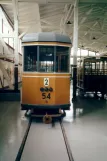
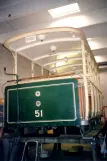
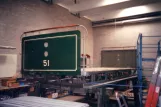
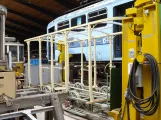
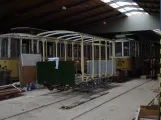
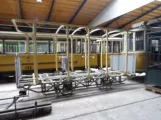
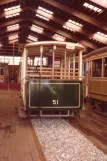
Odense open sidecar 51

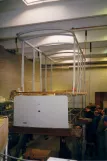
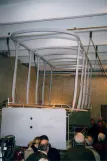
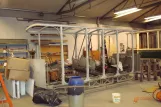
Exhibited in a museum
Trams from Odense

Select vehicle type: Low-floor articulated trams, open sidecars, railcars, service vehicles, sidecars, and snowplows.

The history of the tram

Odense Tramway (OS)
Closed

: Delivered as Odense open sidecar 51, manufacturer Allmänna Svenska Elektriska Aktiebolaget (ASEA).

Tram Museum Skjoldenæsholm
Open regularly

: Arrived at the museum as Skjoldenæsholm open sidecar 51 (ex Odense open sidecar 51), manufacturer Allmänna Svenska Elektriska Aktiebolaget (ASEA).
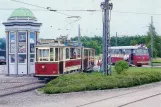
Postcard: Skjoldenæsholm standard gauge with railcar 12 by The Tram Museum (1998)Postcard: Skjoldenæsholm standard gauge with railcar 12 by The Tram Museum (1998)Odense carriages at the Tram Museum forecourt. On the left, motor carriage no. 12 and open sidecar no. 51 from Odense Sporvej. Both were built by ASEA in Sweden in 1913 and 1911, respectively. The motor carriage was restored between 1987 and 1997 by members of the Tram Historical Society in Odense. On the right, bus no. 10 from Odense Bytrafik. The bus is a 1952 Volvo, the first model with an engine located under the floor.By Henrik Boye, Sporvejshistorisk Selskab (SHS) - .
The Tramway Museum - From the archives 2 (2014)
2:01
The Tramway Museum - From the archives 2 (2014)In the second episode, we show something from the film archives from spring 2014By SporvognDK - .
Odense Sporveje 100 years (1911-2011)
27:47
Odense Sporveje 100 years (1911-2011)On October 5, 1911, A/S Odense Elektriske Sporvej began operations. On the same day, the old Odense tram will leave from the Sporvejsmuseet to Flakhaven in Odense and will be on display at Denmark's Railway Museum for the rest of October. The fifth of October — is it exactly 100 years since the Odense Electric Tramway Company began operating its first track? And on this centennial, October 5th, can you see the old Odense track, now at the Gedsholm Tramway Museum in front of Odense City Hall, just as it appeared when first shown to the public on September 12, 1997, after being fully renovated from October 6 through the rest of the month? Can you view the track at the Danish Railway Museum, which currently hosts an exhibition about modern trams and light rail, now making their way back to Denmark's three historic tramway cities: Odense, Copenhagen, and Aarhus? If anyone knows the history of the Odense Tramway, it's Ole Iskov. His father worked for the Odense Tramway Company, and his deep interest in tramways stems from a lifelong fascination. Ole Esgaard authored a book about the Odense Tramway, published by the Tramway Historical Society in 1986. You're mentioned in the foreword of that book. The American author Ray Bradbury’s book, "Dandelion Wine," features a main character, Douglas, who at 12 years old experiences something about the tramway in his hometown in the USA. Why did you mention that book? I can't help but compare it to myself. I was also me—I was 14 when they closed the Odense tramway—and I feel the same way as Douglas in "Dandelion Wine," which isn’t a science fiction book, unlike Bradbury’s usual style. He says something like, "The nice carriage driver comes and drives his tram and says, Hey kids, hop in—it's free today. It’s the last day," Douglas says, "the last day." They can't do that forever—he’d driven the tram his whole life, knew its sounds, its smell, and so on. And I think the same thing happened to me, too. When I arrived in Odense in 1950 and worked with the tramway for two and a half years, I always knew it was going to close—a beautiful day. But it wasn’t until July 1, 1952, when I saw all the carriages idle in Sønderborg, that it really hit me—no more trams. It was serious. Never again. And what strikes me is that the same thing happens again in R. Bredberg’s book. I moved from Svendborg to Odense in January 1950 because my father, a machinist at Svendborg Municipal Electricity Company, was hired as a foreman at Odense Tramway. He was trained as a machinist and apprenticed with Thomas B. Trige before attending the Mechanical Engineering School. He knew Thomas B. Trige, and apprentices usually received a few kind words from him when they became "Svenne." So, my father attended the Mechanical Engineering School and became a machinist, working alongside an electrical installer. He also worked with AP Møller for a few years in the 1930s, including on the tanker Jan Mærk. Mærk came ashore before the war and was employed by the Copenhagen Lighting Service, working at HC Ørstedsværket and the good damage repair shop. My father also chose his predecessor, the old post foreman Andersen, a trained machinist. That’s why it felt right for me to come to Odense, just like Odense's tracks. Even though I knew from the newspapers that it was going to shut down, I already had a slight interest in the trams of Copenhagen. I was born in Copenhagen and lived on line five, which was the last tram line there, so I had it in my blood. The first time I was with my father in the depot, I saw all the trams—it was truly exciting. They were mostly out and running, but some remained in the depot. Strangely, I even got a greeting from the depot director that day. He thought it was fun to walk around and see what kind of kids were in the depot. He was always kind. I’d previously gone for a ride in Odense and was very excited. The trams I saw were red and blue. I was used to the yellow ones in Copenhagen. It was fortunate that my father's face meant we kids got free passes—though only on school days or weekdays, not on weekends, holidays, or evenings. But when the trams finally ran, I gradually learned all the motor cars—and I remember every single one. Number 12 was one of them, sold to Uppsala in 1945, along with number six. I knew many drivers—I eagerly stood close to them—and even many conductors, though I'm not sure they all knew me. I was a shy boy, after all. But the conductors were nice, and I always enjoyed my rides.By SporvognDK - - .

Add a comment

Last updated: .