TRAM TRAVELS

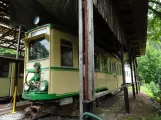
Mannheim railcar 28

Exhibited in a museum
Trams from Mannheim

Select vehicle type: Articulated trams, freight cars, low-floor articulated trams, and railcars.

Railcars from Mannheim

Select vehicle number: 27, 28, and 56.

The history of the tram

Oberrheinische Eisenbahn-Gesellschaft (OEG)
Closed

: Delivered as Mannheim railcar 28, manufacturer Waggonfabrik Fuchs Heidelberg, type Fuchs, length 12.70 m, weight 21.0 t.
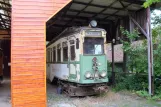
Hannoversches Straßenbahn-Museum (HSM)
Open regularly

: Arrived at the museum as Hannover railcar 28 (ex Mannheim railcar 28), manufacturer Waggonfabrik Fuchs Heidelberg, type Fuchs, length 12.70 m, weight 21.0 t.
Folder from Hannoversches Straßenbahn-Museum (HSM), the back (2022)Added
Folder from Hannoversches Straßenbahn-Museum (HSM), the back (2022)Nostalgia and technology HSM Nostalgia: When traveling on the historic trams in the tram museum in Wehmingen, fans of nostalgia can enjoy the flair of bygone times. Wood, brass, and leather are still used here instead of steel and plastic. A conductor drives the cars, takes photos of the tickets along the way, and answers questions. Technology: Technology enthusiasts discover the tram's development at the museum. Railways spanning eight decades can be explored in the exhibition halls, from the horse-drawn tram to the near-modern articulated carriage. Exhibitions on tram technology and history complement the over sixty original vehicles. Museum grounds: The museum grounds “auf dem Dorfe”, about 20 km southeast of Hanover, have their own history. In 1902, the first potash mine on the Lehrte-Sehnder salt dome was put into operation here. Many old buildings have been preserved and form the backdrop for the historic tram cars. Route: The museum's tram route was created from the factory railway tracks. Various historic trams from 1921 to 1982 run the 2.5-km-long circuit along the old industrial facilities and through a forest at least every 20 minutes. The external route outside the museum grounds is used every half hour. Vehicle collection: The museum has the only national tram collection in Germany. The range extends from Bremen to Munich, from Düsseldorf to Dresden, supplemented by a few foreign cars. Outstanding features include a horse-drawn summer carriage from Heidelberg, the over 100-year-old subway from Budapest and the comfortable “diplomat train” from Bonn. Of course, the Tram Hannover tram cars take up a lot of space. The oldest cars were saved from scrapping by tram enthusiasts in the early 1970s and are now being gradually restored. Museum: You should allow enough time for a visit. There is a lot to see, and you can fortify yourself with culinary delights on-site, in between, or afterward. We also have a range of postcards, books and other souvenirs available for you. Association: The Hanover Tram Museum is run by the museum association of the same name. All work is carried out voluntarily by club members. We would greatly appreciate your support. We warmly welcome you as a new club member or as a donor. Very close: The technology museum in the Green HSM
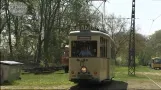
Tram Museum Wehmingen (2020)
7:15
Tram Museum Wehmingen (2020)One of the most prominent tram museums is in Wehmingen near Hanover. You can see exhibits from all over Europe. Highlights include rides on the operational vehicles. A modest sign points to one of Germany's most renowned tram museums. In just a few minutes near Hanover, trams from all over Europe run and stop. Choose the display for this railcar. The train numbered 35 33 came from Bremen. The short, articulated railcar, built in 1976, was manufactured by Wegmann. It runs on the museum's own track, with proper stops. Car 389 is much older; it was built in 1951 by de Bug for the Düsseldorf trams. This railcar is a so-called association type, still primarily based on pre-war designs. Here in Memmingen, the old car has a new home, and as you can see, 389 is even operational. Many of the tram exhibits have been beautifully restored. Number 2 comes from Neuenkirchen. Behind it is a pre-war tram from the Üstra in Hanover. In between, there’s everything that tram enthusiasts love, from textbooks to DVDs. The 1895 Budapest subway train is one of the most valuable exhibits. Budapest's metro is one of the oldest on the European continent. Number 7,156 ran in The Hague. Next to it is the 281 overland tram from the former Upper Rhine Railway, which needs restoration. Line 11 was also a country road tram that ran between Hildesheim and Hanover until 1958. Next to it is the 461 overland tram from Viertel in Switzerland. The museum exhibits are all touchable, and almost every tram can be entered. The dusty charm of the 50s and 60s invites visitors to linger. Next to the Freiburg tram is a three-axle tram from Bonn. Over 100 vehicles can be seen in just a few minutes, offering a journey through European tram history. The horse-drawn tram from Hamburg is one of the oldest exhibits, though its exact construction year is unknown. A special feature of the museum is that it offers rides on its own tracks, without a schedule. The old trains run along these tracks. The 389 from Düsseldorf is back on the road, with its next trip scheduled for 23-04, involving the nearly 60-year-old train from Düsseldorf. The Bremen tram, now designated as Line 1, was much more modern when it was relocated to Osterholz. A T24 from Berlin is also on display; this well-restored tram has been operational again since 2008. The tram museum in Memmingen is open every Sunday and public holiday from April to October. With a bit of luck, visitors can even ride a Kassel tram from 1936.By The Travelling Drone - .

Add a comment

Last updated: .