Photos from San Francisco Railway Museum
There are 90 tram and light rail photos from San Francisco Railway Museum on Tram Travels.
Photos of trams worldwide
Select a country: Algeria, Argentina, Australia, Austria, Belarus, Belgium, Bosnia and Herzegovina, Brazil, Bulgaria, Canada, Chile, China, Croatia, Cuba, Czech Republic, Denmark, Ecuador, Egypt, Estonia, Finland, France, Georgia, Germany, Greece, Guyana, Hungary, India, Ireland, Israel / Palestine, Italy, Japan, Latvia, Lebanon, Lithuania, Luxembourg, Mexico, Morocco, Netherlands, New Zealand, Norway, Paraguay, Peru, Philippines, Poland, Portugal, Romania, Russia, Serbia, Slovakia, Spain, Sweden, Switzerland, Turkey, Ukraine, United Kingdom, United States, and Venezuela.
Photos of trams in United States
Select a city: Baltimore, Boston, Buffalo, Chicago, Cleveland, Dallas, Denver, Detroit, French Lick, Houston, Jamestown, Los Angeles, Minneapolis, Montgomery, New Haven, New Orleans, New York City, Omaha, Orlando, Philadelphia, Phoenix, Portland, Racine, Sacramento, Salt Lake City, San Diego, San Francisco, San Jose, Seattle, St. Louis, and Washington, D.C..
Photos of trams in San Francisco
Cable Car Fresh Sandwiches, Cable Car Hotel, Market Street Railway (MSR), Muni Metro, San Francisco Cable Car Museum, San Francisco Cable Cars, and San Francisco Railway Museum.
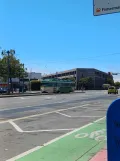 San Francisco F-Market & Wharves with railcar 1008 near Embarcadero & Greenwich (2024)By Gustav Robert Boye.
July 8, 2024.
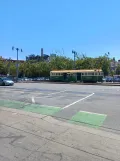 San Francisco F-Market & Wharves with railcar 496 at Embarcadero & Washington (2024)By Gustav Robert Boye.
July 8, 2024.
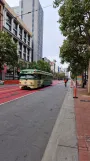 San Francisco F-Market & Wharves with railcar 1008 at Market & 5th (2024)By Janus Boye.
July 7, 2024.
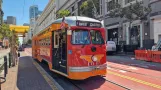 San Francisco F-Market & Wharves with railcar 1061 at Market & Powell (2024)By Janus Boye.
July 7, 2024.
 Calendar: San Francisco F-Market & Wharves with railcar 1079 near Embarcadero & Sansome (2023)By Glen Brewer, Henrik Boye, San Francisco Railway Museum.
November 2023.
 Calendar: San Francisco E-Embarcadero Steetcar with railcar 496 at Embarcadero & Ferry Building (2023)By Adolfo Echeverry, Henrik Boye, San Francisco Railway Museum.
October 2023.
 Calendar: San Francisco F-Market & Wharves with railcar 1051 at 17th & Castro (2023)By Adolfo Echeverry, Henrik Boye, San Francisco Railway Museum.
September 2023.
 Calendar: San Francisco F-Market & Wharves with railcar 1056 close by Don Chee Way & Steuart (2023)By Henrik Boye, San Francisco Railway Museum, Wayne Worden.
August 2023.
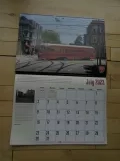 Calendar: San Francisco railcar 1061 in the intersection Church Street / 17th Street (2023)By Henrik Boye, Jon Porter, San Francisco Railway Museum.
July 2023.
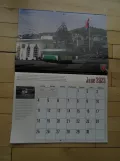 Calendar: San Francisco F-Market & Wharves with railcar 162 on 17th & Castro (2023)By Henrik Boye, San Francisco Railway Museum, Steve Ferrario.
June 2023.
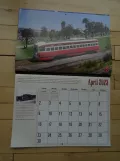 Calendar: San Francisco railcar 1062 at Church & 18th (2023)By Henrik Boye, Ian Martin, San Francisco Railway Museum.
April 2023.
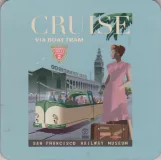
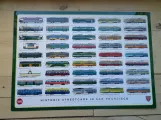
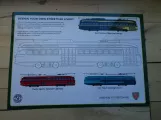 Coasters: San Francisco, the front Desing your own Streetcar livery (2023)By Henrik Boye, San Francisco Railway Museum.
March 14, 2023.
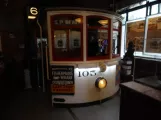
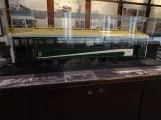
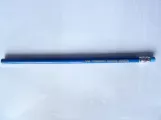 Pencil: San Francisco Railway Museum (2023)By Henrik Boye, San Francisco Railway Museum.
March 14, 2023.
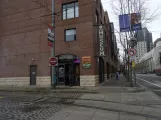
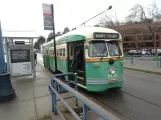 San Francisco F-Market & Wharves with railcar 1058 at The Embarcadero & Bay Street (2023)By Henrik Boye.
March 12, 2023.
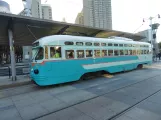 San Francisco F-Market & Wharves with railcar 1076 at The Embarcadero & Ferry Building (2023)By Henrik Boye.
March 10, 2023.
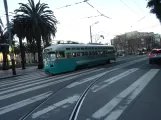 San Francisco F-Market & Wharves with railcar 1076 near Don Chee Way & Steuart (2023)By Henrik Boye.
March 10, 2023.
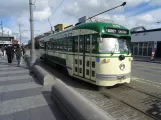 San Francisco F-Market & Wharves with railcar 1051 at Jefferson & Taylor (2023)By Henrik Boye.
March 7, 2023.
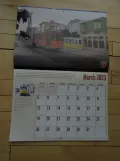 Calendar: San Francisco railcar 1895 near Church & 27th (2023)By Henrik Boye, Matthew Lee, San Francisco Railway Museum.
March 2023.
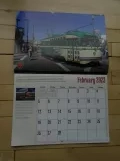 Calendar: San Francisco F-Market & Wharves with railcar 1040 at Fisherman's Wharf (2023)By Henrik Boye, San Francisco Railway Museum, Wayne Worden.
February 2023.
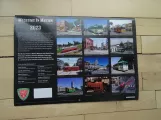
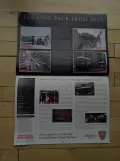 Calendar: San Francisco inside Railway Museum (2023)By Henrik Boye, San Francisco Railway Museum.
2023.
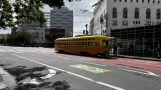 San Francisco F-Market & Wharves with railcar 1052 at Market & Larkin (2022)By Silas Boye Nissen.
April 21, 2022.
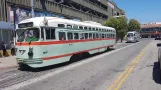
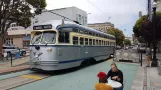 San Francisco F-Market & Wharves with railcar 1060 at 17th & Castro (2021)By Silas Boye Nissen.
July 11, 2021.
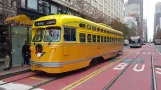 San Francisco F-Market & Wharves with railcar 1052 near Market & 5th (2019)By Silas Boye Nissen.
December 13, 2019.
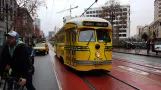 San Francisco F-Market & Wharves with railcar 1057 at Market Street & Powell Street (2019)By Silas Boye Nissen.
December 11, 2019.
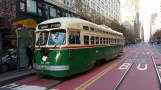 San Francisco F-Market & Wharves with railcar 1055 near Market & Battery (2019)By Silas Boye Nissen.
December 8, 2019.
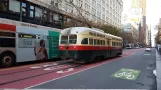 San Francisco F-Market & Wharves with railcar 1077 close by Market & 4th (2019)By Silas Boye Nissen.
December 8, 2019.
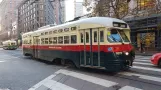 San Francisco F-Market & Wharves with railcar 1077 near Market & Stockton (2019)By Silas Boye Nissen.
December 8, 2019.
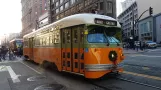 San Francisco F-Market & Wharves with railcar 1080 near Market & Stockton (2019)By Silas Boye Nissen.
December 8, 2019.
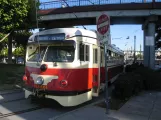 San Francisco E-Embarcadero Steetcar with railcar 1009 near Embarcadero & Stockton (2016)By Silas Boye Nissen.
June 12, 2016.
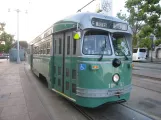 San Francisco F-Market & Wharves with railcar 1053 near Embarcadero & Stockton (2016)By Silas Boye Nissen.
June 12, 2016.
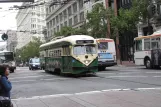 San Francisco F-Market & Wharves with railcar 1062 near Market & Van Ness (2010)By Michael Olsen.
July 8, 2010.
 San Francisco F-Market & Wharves with railcar 1010 at The Embarcadero & Ferry Building (2010)By Michael Olsen.
July 7, 2010.
 San Francisco F-Market & Wharves with railcar 1010, the back Embarcadero & Ferry Building (2010)By Michael Olsen.
July 7, 2010.
 San Francisco F-Market & Wharves with railcar 1053 near Market & Noe (2010)By Michael Olsen.
July 7, 2010.
 San Francisco F-Market & Wharves with railcar 1060 on Market & Kearny (2010)By Michael Olsen.
July 7, 2010.
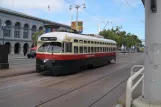 San Francisco F-Market & Wharves with railcar 1077 at Embarcadero & Ferry Building (2010)By Michael Olsen.
July 7, 2010.
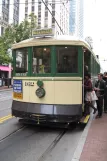 San Francisco F-Market & Wharves with railcar 162 at Market Street & Kearny Street (2010)By Michael Olsen.
July 7, 2010.
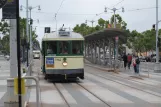 San Francisco F-Market & Wharves with railcar 162 at The Embarcadero & Ferry Building (2010)By Michael Olsen.
July 7, 2010.
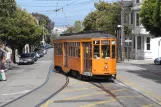 San Francisco F-Market & Wharves with railcar 1815 at 17th & Castro (2010)By Michael Olsen.
July 7, 2010.
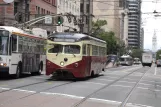 San Francisco F-Market & Wharves with railcar 1007 near Market & Battery (2010)By Michael Olsen.
July 6, 2010.
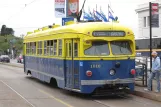 San Francisco F-Market & Wharves with railcar 1010 at The Embarcadero & Stockton Street (2010)By Michael Olsen.
July 6, 2010.
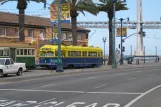 San Francisco F-Market & Wharves with railcar 1010 near Don Chee Way & Steuart (2010)By Michael Olsen.
July 6, 2010.
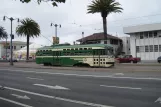 San Francisco F-Market & Wharves with railcar 1050 near Embarcadero & Bay (2010)By Michael Olsen.
July 6, 2010.
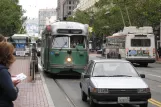 San Francisco F-Market & Wharves with railcar 1053 at Market Street & Battery Street (2010)By Michael Olsen.
July 6, 2010.
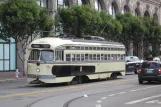 San Francisco F-Market & Wharves with railcar 1056 near Don Chee Way & Steuart (2010)By Michael Olsen.
July 6, 2010.
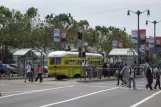 San Francisco F-Market & Wharves with railcar 1057 at The Embarcadero & Sansome Street (2010)By Michael Olsen.
July 6, 2010.
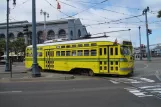 San Francisco F-Market & Wharves with railcar 1057 near Don Chee Way & Steuart (2010)By Michael Olsen.
July 6, 2010.
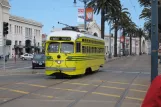 San Francisco F-Market & Wharves with railcar 1057 near Embarcadero & Bay (2010)By Michael Olsen.
July 6, 2010.
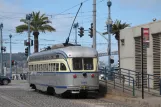 San Francisco F-Market & Wharves with railcar 1060 at Don Chee Way / Steuart Street (2010)By Michael Olsen.
July 6, 2010.
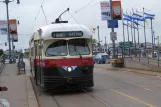 San Francisco F-Market & Wharves with railcar 1077 at The Embarcadero & Stockton Street (2010)By Michael Olsen.
July 6, 2010.
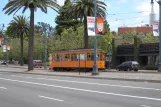 San Francisco F-Market & Wharves with railcar 1815 near Embarcadero & Bay (2010)By Michael Olsen.
July 6, 2010.
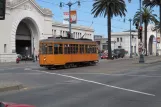 San Francisco F-Market & Wharves with railcar 1856 near Embarcadero & Bay (2010)By Michael Olsen.
July 6, 2010.
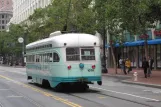
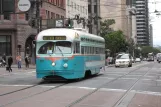
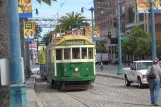
 San Francisco F-Market & Wharves with railcar 1007 at Market Street & 4th Street (2010)By Michael Olsen.
July 5, 2010.
 San Francisco F-Market & Wharves with railcar 1056 at Market & Stockton (2010)By Michael Olsen.
July 5, 2010.
 San Francisco F-Market & Wharves with railcar 1075 at Market & Noe (2010)By Michael Olsen.
July 5, 2010.
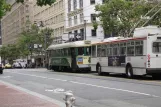 San Francisco F-Market & Wharves with railcar 162 near Market & Stockton (2010)By Michael Olsen.
July 5, 2010.
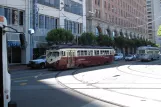 San Francisco F-Market & Wharves with railcar 1007 outside Railway Museum (2010)By Michael Olsen.
July 4, 2010.
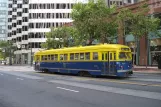 San Francisco F-Market & Wharves with railcar 1010 at Market & 5th (2010)By Michael Olsen.
July 4, 2010.
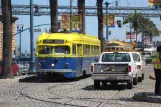 San Francisco F-Market & Wharves with railcar 1010 near Embarcadero & Stockton (2010)By Michael Olsen.
July 4, 2010.
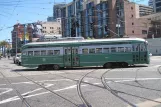 San Francisco F-Market & Wharves with railcar 1053 close by Embarcadero & Stockton (2010)By Michael Olsen.
July 4, 2010.
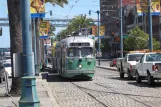 San Francisco F-Market & Wharves with railcar 1053 near Embarcadero & Stockton (2010)By Michael Olsen.
July 4, 2010.
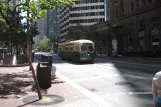 San Francisco F-Market & Wharves with railcar 1055 near Market & Main (2010)By Michael Olsen.
July 4, 2010.
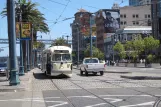 San Francisco F-Market & Wharves with railcar 1056 at Embarcadero & Stockton (2010)By Michael Olsen.
July 4, 2010.
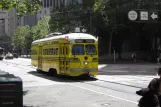 San Francisco F-Market & Wharves with railcar 1057 at Market & Drumm (2010)By Michael Olsen.
July 4, 2010.
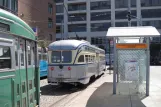 San Francisco F-Market & Wharves with railcar 1060 at Railway Museum (2010)By Michael Olsen.
July 4, 2010.
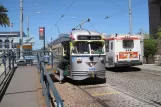 San Francisco F-Market & Wharves with railcar 1060 on Railway Museum (2010)By Michael Olsen.
July 4, 2010.
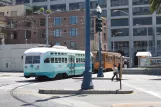 San Francisco F-Market & Wharves with railcar 1076 at Don Chee Way / Steuart Street (2010)By Michael Olsen.
July 4, 2010.
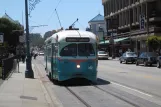 San Francisco F-Market & Wharves with railcar 1076 near Beach & Mason (2010)By Michael Olsen.
July 4, 2010.
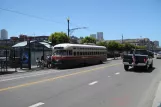 San Francisco F-Market & Wharves with railcar 1077 at Stockton & Beach (2010)By Michael Olsen.
July 4, 2010.
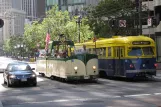 San Francisco F-Market & Wharves with railcar 228 at Market & Taylor (2010)By Michael Olsen.
July 4, 2010.
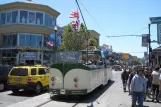 San Francisco F-Market & Wharves with railcar 228 near Jefferson & Taylor (2010)By Michael Olsen.
July 4, 2010.
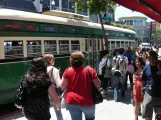 San Francisco F-Market & Wharves with railcar 1062 at Jefferson & Taylor (2009)By Jytte Bach Jensen.
May 2009.
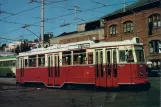 Postcard: San Francisco railcar 3557 at United Railroads Geneva Carhouse (1989)By Henrik Boye, Peter Ehrlich, Samuel R. Ganczaruk.
June 20, 1989.
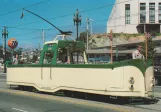 Postcard: San Francisco F-Market & Wharves with railcar 228 in the intersection Market Streets/Duboce Avenue (1986)By Henrik Boye, Jeff Morcau, Samuel R. Ganczaruk.
May 26, 1986.
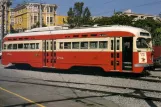 Postcard: San Francisco E-Embarcadero Steetcar with railcar 1704 near Church & Duboce (1985)By Bill MacDonald, Henrik Boye, J. Barnard Photographer.
September 1985.
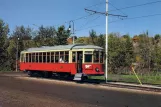 Postcard: San Francisco E-Embarcadero Steetcar with railcar 42 near 2nd & King (1984)By Henrik Boye, J. Barnard Photographer.
1984.
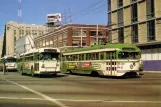 Postcard: San Francisco E-Embarcadero Steetcar with railcar 1008 near Market & Sanchez (1969)By Bill MacDonald, Henrik Boye, J. Barnard Photographer.
1969.