Wuppertal Barmer Bergbahn: Am Clef - Toelleturm
ClosedCity: Wuppertal (Germany).
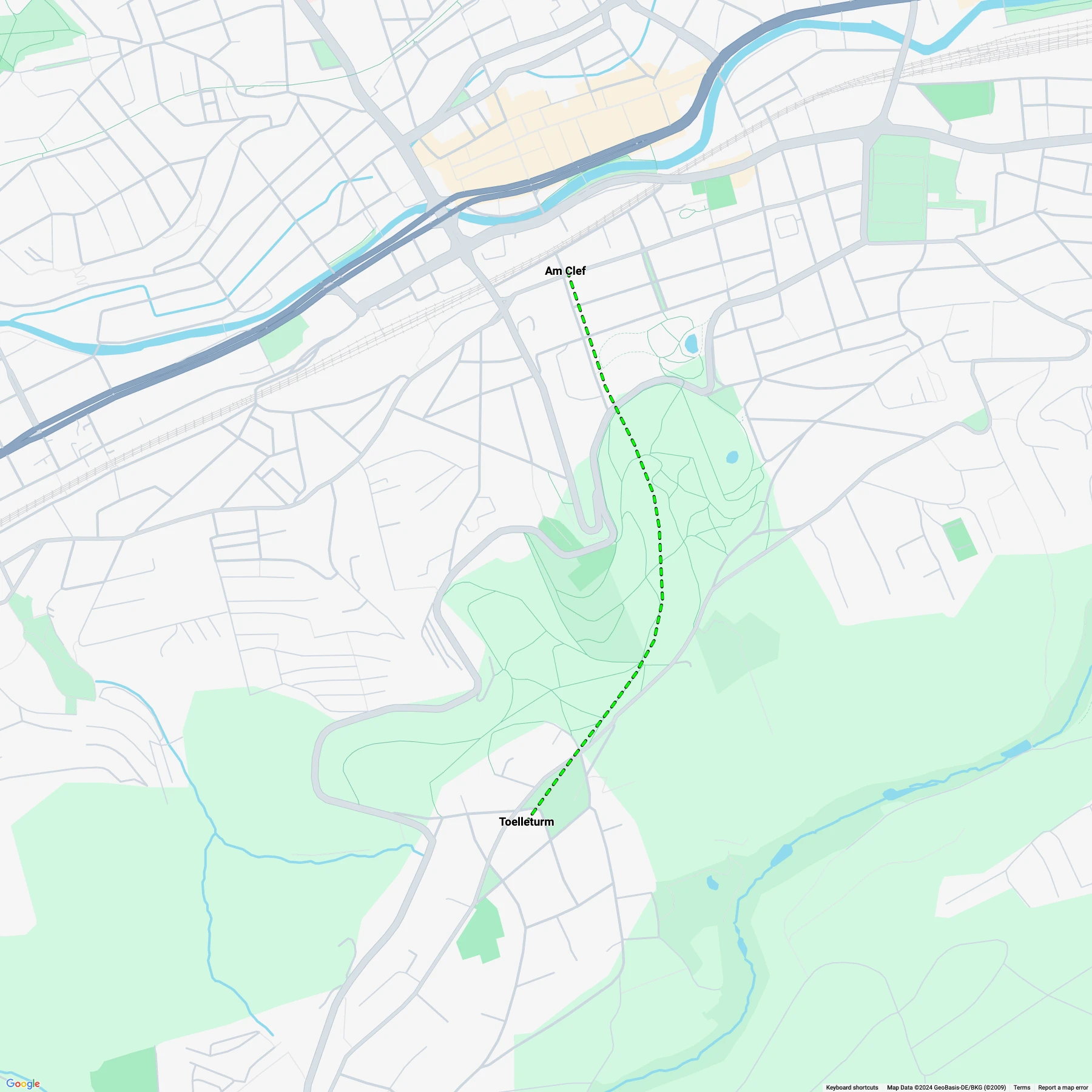
Total route length: 1.5 km (0.9 miles).
Driving time: 13 min.
Track gauge: 1000 mm (metre gauge).
Opened: .
Closed: .
Lines in Wuppertal
Select line type: Tram lines, funiculars, museum lines, and regional lines.
Funiculars in Wuppertal
Stops
Am Clef → Toelleturm Bergbahnhof.

View the route map in high resolution.
Photos and videos of Wuppertal Barmer Bergbahn: Am Clef - Toelleturm
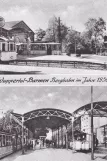
Postcard: Wuppertal Barmer Bergbahn with railcar Barmer Bergbahn 1 at Toelleturm Bergbahnhof (1970)Barmer Bergbahn Tw i in the mountain station, formerly Barmer Bergbahn.By Henrik Boye, Sammlung VhAg, Verkehrshistorische Arbeitsgemeinschaft der WSW - .
Postcard: Wuppertal Barmer Bergbahn with railcar Barmer Bergbahn 5 (1959)By Friederich, Henrik Boye, Verkehrshistorische Arbeitsgemeinschaft der WSW..
Postcard: Wuppertal Barmer Bergbahn with railcar Barmer Bergbahn 5 near Toelleturm (1958)Wuppertaler Stadtwerke AG.
Cog railway car No. 5, built in 1894, Hoffmann company, rebuilt in 1939 in their own workshop.
Bergische Museumsbahnen e. V.
P.O. Box 131 557
5600 Wuppertal 1By Bergischen Museumsbahnen (BMB), Henrik Boye - .
Postcard: Wuppertal funicular Barmer Bergbahn at Am Clef (1950)Wuppertal-Barmen Mountain Railway in 1950
No. 112By Henrik Boye, Verlag Wener Weber - .
5:27
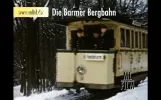
MLHF: 6. The Barmer Bergbahn - Historic Tram in Wuppertal (1894-1959)As early as 1887, Barmen entrepreneurs met to make plans for a railway for the southern heights of their town. The men showed great courage and foresight when they commissioned the first plans to build a railway from Barmen Mitte to the Toelleturm and a connecting line to Ronsdorf that same year. It was quickly recognized that an electric rack railway was the best option among all ideas. In May 1892, construction began on the 1,630-meter-long route, which featured a 170-meter elevation change. The route was closed on July 4, 1959, despite protests from residents.
Material that is over 50 years old takes you back to the time of narrow film and is an impressive reminder of this unique route in Barmen.
As early as 1887, entrepreneurs in Barmen gathered to plan a railway to the southern heights of their town. Men like Geheimrad Molineus and Adolf Vorwerk stood out with great courage and significant achievements when, in the same year, they commissioned the first plans to build a railway from Ben Mitte to the Tölleturm, along with a connecting line to Ronsdorf. It quickly became clear that, because of the steep gradient, an electric rack railway was the best solution. Siemens and Halzke introduced electric drive to the technically eager Barmen visionaries in 1890. This company was soon given the contract to build an electric, double-track, meter-gauge railway, following the Rhenish system. Construction began in May 1892 on the 1,630-meter-long line, and that same year, the Barmmer Bergbahn AG was founded. To reach the highest point in Barmen, the Tölleturm, a 170-meter elevation change had to be crossed. The route mostly followed a downhill path with an 18.5% gradient. The steepest part was right at the start of the route. After crossing the Bergischmark Railway, vehicles were transferred at the terminal stations using transfer platforms. The Bammer Bergbahn started operations on April 16, 1894. In the winter of 1958/59, the railway proved its ability to operate in ice and snow for the last time. The following summer, on July 4, 1959, Germany's oldest electric rack railway closed after 65 years of safe operation, despite many protests. The mountain railway's own power station was located in the vault beneath the mountain station on Kleferstrasse. The original steam dynamos, each with 250 hp, were soon replaced by larger machines. A sizable power station was built to supply energy to both the railway lines and nearby industries.By ML HISTORIC FILM (MLHF) - - .
3:04
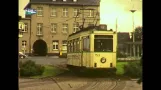
Vintage tram in Wuppertal, Germany (1894-1987)On May 30, 1987, a tram ran through Wuppertal for the last time. With two different track gauges, including the first electrically operated rack railway in Germany, and routes to neighboring cities, the city had one of the largest tram networks in Germany. There was extensive freight traffic on the tram tracks, such as from Loh to Hatzfeld. The Barmer Bergbahn closed in July 1959, just a few months after its 65th anniversary. The meter-gauge network was shut down during the wave of closures in July 1970. The remaining standard-gauge lines were gradually closed from the 1970s onward.
In this film, take a look back at the good old days of the tram in the Wupper Valley and on routes to Remscheid and Solingen. Exciting footage of the Barmer Bergbahn in regular operation, the Remscheid tram, the Loh-Hatzfeld narrow-gauge railway, and the origins of the Bergisches Tram Museum take you back to the 1960s and 1970s.
The charm of this era is brought to life again in this modern historical documentary.
Wuppertal, located in North Rhine-Westphalia, had trams operating between 1960 and the 1970s. These vehicles came from various manufacturers, with some converted or built locally. The routes followed stunning scenic paths, crossing bridges, passing through city centers and countryside, and even crossing tunnels. The history of the railway is unique because it only achieved its final form in 1940, after several mergers of independent companies. This resulted in over 270 kilometers of routes with 24 lines in operation, running on both meter and standard gauges. In this film, you’ll see amazing shots from a bygone era when nearly all types of vehicles were in use. You'll also have the opportunity to marvel at Germany's first and oldest electrically operated rack railway. Travel back in time with this approximately 50-minute documentary.By tram-TV - - .