Vienna regional line 515 - Badner Bahn: Oper (Kärntner Ring) - Baden Josefplatz
OperationalCity: Vienna (Austria).
Route length: 30.7 km (19.1 miles).
Driving time: 62 min.
Track gauge: 1435 mm (standard gauge).
Opened: May 1, 1907.
Lines in Vienna
Select line type: Tram lines, extra lines, museum lines, night lines, regional lines, and tourist lines.
Regional lines in Vienna
Vienna regional line 515 - Badner Bahn: Oper (Kärntner Ring) - Baden Josefplatz
Operational
Stops
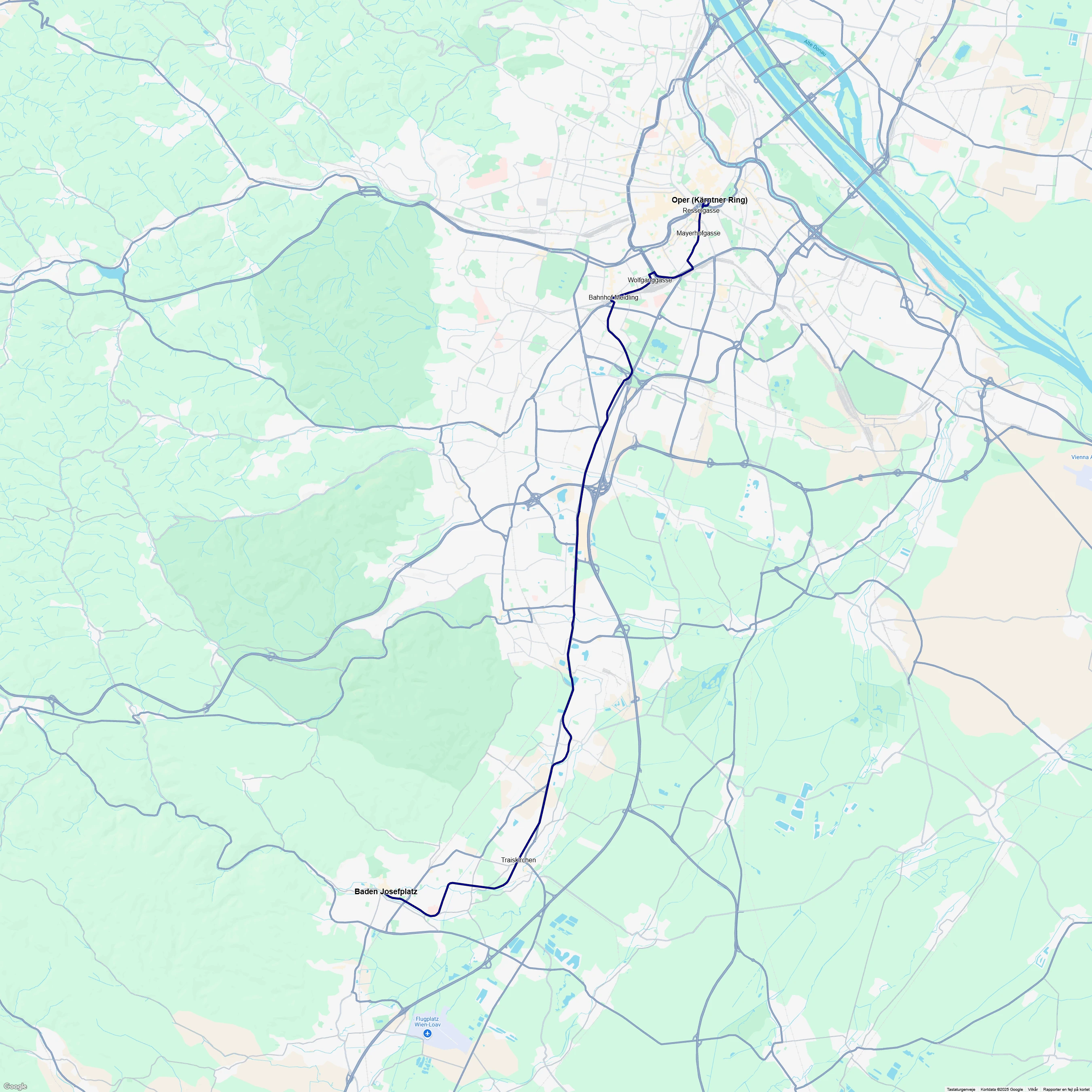
Oper (Kärntner Ring) → Baden Josefplatz → Resselgasse → Mayerhofgasse → Bahnhof Meidling → Matzlernsdoferplatz → Wolfganggasse → Traiskirchen.

View the route map in high resolution.
Photos and videos of Vienna regional line 515 - Badner Bahn: Oper (Kärntner Ring) - Baden Josefplatz
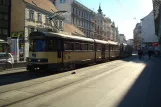
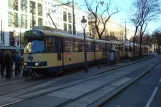 Vienna regional line 515 - Badner Bahn with articulated tram 4-115 "Andreas" at Oper (2014)By Henrik Boye.
December 24, 2014.
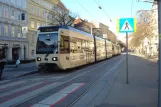
 Vienna regional line 515 - Badner Bahn with articulated tram 4-121 "Erika" at Resselgasse (2014)By Henrik Boye.
December 24, 2014.
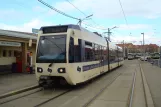
 Vienna regional line 515 - Badner Bahn with low-floor articulated tram 404 at Mayerhofgasse (2014)By Henrik Boye.
December 24, 2014.
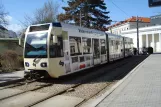
 Vienna regional line 515 - Badner Bahn with low-floor articulated tram 401 at Wolfganggasse (2010)By Henrik Boye.
March 28, 2010.
 Vienna regional line 515 - Badner Bahn with low-floor articulated tram 407 at Baden Josefplatz (2010)By Henrik Boye.
March 28, 2010.
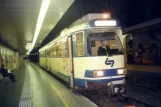 Vienna regional line 515 - Badner Bahn with articulated tram 102 "Karl" at Matzlernsdoferplatz (2001)By Henrik Boye.
April 14, 2001.
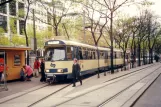 Vienna regional line 515 - Badner Bahn with articulated tram 120 "Michaela" at Oper (2001)By Henrik Boye.
April 14, 2001.
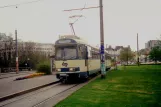 Vienna regional line 515 - Badner Bahn with articulated tram 125 "Susanne" on Karlsplatz (2001)By Henrik Boye.
April 14, 2001.
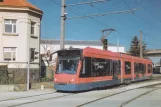 Postcard: Vienna regional line 515 - Badner Bahn near Traiskirchen (1997)By Henrik Boye, Norbert Schmid.
March 11, 1997.
 Postcard: Vienna regional line 515 - Badner Bahn with railcar 200 near Leesdorf (1990)By Andreas Scolz, Henrik Boye, Verkehrsverbund Ost-Region (VOR).
1990.
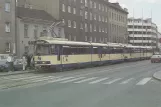 Postcard: Vienna regional line 515 - Badner Bahn with articulated tram 105 at Bahnhof Meidling (1984)By Hans Heinz Heider, Henrik Boye, Verkehrsverbund Ost-Region (VOR).
1984.
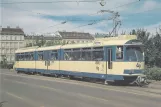 Postcard: Vienna regional line 515 - Badner Bahn with articulated tram 107 "Heri" on Karlsplatz (1984)By Hans Heinz Heider, Verkehrsverbund Ost-Region (VOR).
1984.
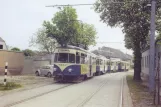 Postcard: Vienna regional line 515 - Badner Bahn with sidecar 94 on Feldgasse (1983)By Henrik Boye, Josef Hlavac, Norbert Schmid.
April 30, 1983.
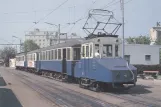 Postcard: Vienna regional line 515 - Badner Bahn with motor freight car 01 at Wolfganggasse (1980)By Hans Heinz Heider, Henrik Boye, Verkehrsverbund Ost-Region (VOR).
1980.
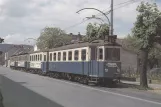 Postcard: Vienna regional line 515 - Badner Bahn with railcar 23 near Leesdorf (1980)By Hans Heinz Heider, Henrik Boye, Verkehrsverbund Ost-Region (VOR).
1980.
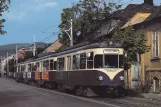 Postcard: Vienna regional line 515 - Badner Bahn on Kaiser Franz Joseph-Ring (1979)By Der Bahnladen, Henrik Boye, Wolfgang Walper.
September 1979.
 Postcard: Vienna regional line 515 - Badner Bahn with railcar 13 near Philadelphiabrücke (1970)By Hans Heinz Heider, Henrik Boye, Verkehrsverbund Ost-Region (VOR).
1970.