Tallinn tourist line Konstantin
OperationalCity: Tallinn (Estonia).
Total route length: 18.8 km (11.7 miles).
Track gauge: 1067 mm.
Description
Drive around the entire tram network
Lines in Tallinn
Select line type: Tram lines, and tourist lines.
Tourist lines in Tallinn
Tallinn tourist line Konstantin
Operational
Stops
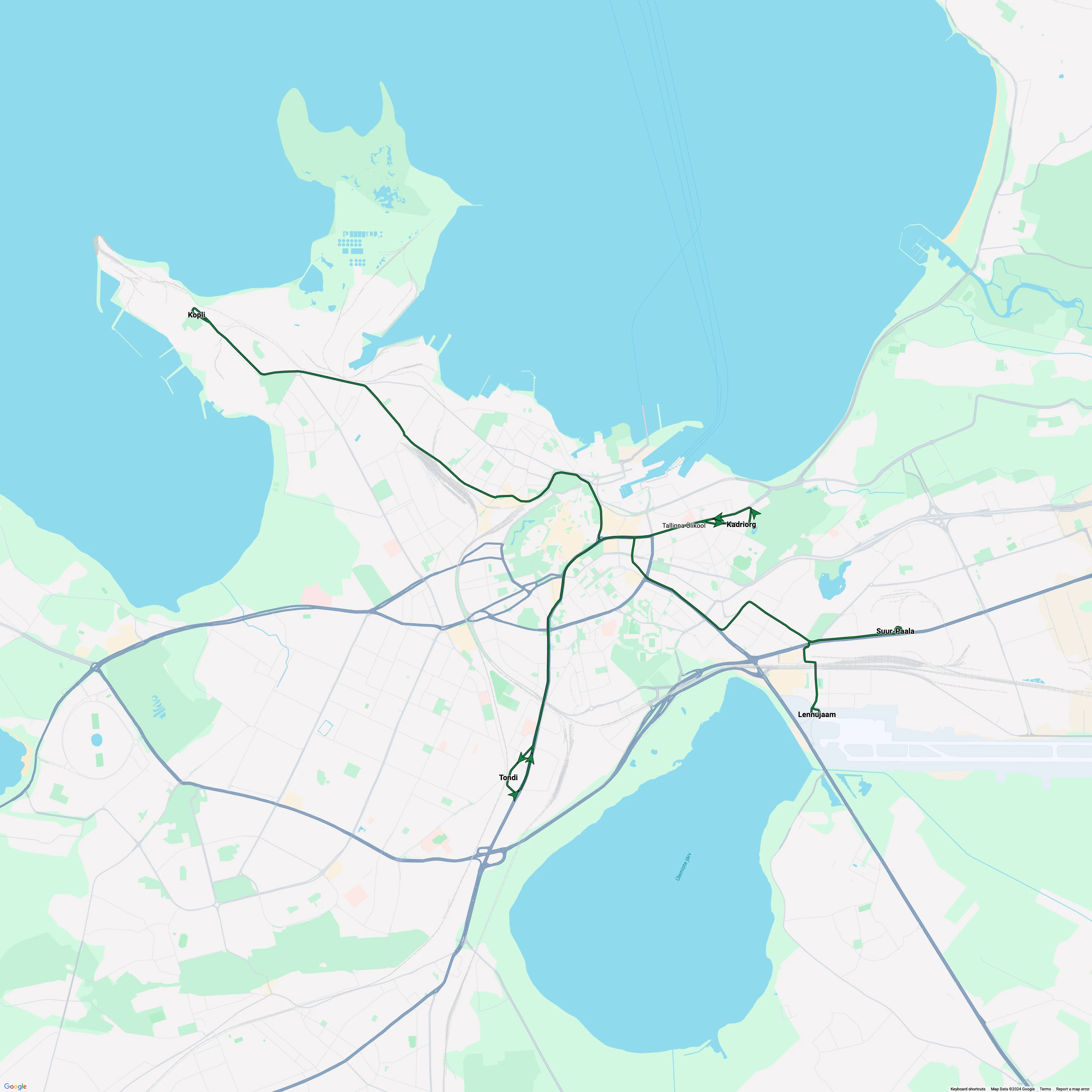
Suur-Paala → Kopli → Kadriorg → Lennujaam → Tondi → Talllinna Ülikool TLÜ.

View the route map in high resolution.
Photos and videos of Tallinn tourist line Konstantin
7:46
The Tram System With A Bright Future: Tallinn Tram 🇪🇪 | Urban Transport #2 (2022)The tram network of Tallinn is a fascinating one, although it is relatively small, and the city is continually working on it. :) Enjoy this short video about it! This will eventually become part of another series I will work on, where I will discuss other transit systems and similar topics.
In today's episode: Tallinn, Estonia🇪🇪
Chapters:
00:00 Intro
00:44 History
02:00 Network
04:09 Ridership
05:08 Fleet
06:18 Future
07:11 Outro
Hello and welcome to Tallinn, the beautiful capital of Estonia. In today's video, we'll explore the city's tram network. Tallinn's tram system is the only one in Estonia and forms the core of the city's public transportation. The network is poised for expansion and will also serve as a vital international link. Let's take a closer look at this small but interesting network. The tram network has a long history. The horse-drawn tram line began operating in Tallinn in 1888, when the city was still called Reval. This tram used a gauge of 1067 millimeters, which is still the gauge of Tallinn's trams today. Later, it was joined by a steam tram that transported workers from the city center to Kopli, the industrial district. This line was built by a major local shipyard. The steam tram used the same gauge, an older version of the Russian standard gauge. Electric trams started running in Tallinn in 1925 on the former Holster line. A few years later, the line to Kopli was re-gauged to match the 1067-millimeter network. However, with the onset of World War II and the subsequent Soviet annexation, the expansion and upgrade of the tram network paused in the 1950s.
The network underwent minor upgrades, including the addition of a second track on the Kopli section and its extension to Ulemiste. After Estonia regained independence, the network expanded to the airport. Between 2014 and the end of 2017, most of the tram system underwent reconstruction and modernization. Today, the Tallinn tram network comprises four lines, covering a total of 42.8 kilometers of track, all of which are double-tracked. There are two depots, and trams typically run at a 10-minute interval, with a 5-minute headway on interchange sections due to interlining. The gauge allows tight turns, which are helpful in several spots. 600-volt DC overhead wires power it.
On the map, the network is represented by the following lines: Line 1 to Kopli, Line 2 to Kopli-Surpal, Line 3 to Kadriorg, and Line 4 from Dondi to the airport. All lines meet at Hobyaama, a stop east of the Old Town near the Viru Keskus shopping mall. Viru Keskus is also a significant hub for Tallinn's bus system. As mentioned earlier, Tallinn has two tram depots: one located along Perho Mante and another in Kopli. The tram connects to Balti Jaam—the central railway station—on lines 1 and 2. Tallinn Airport is located at the end of Line 4, and the intercity bus station is situated along Lines 2 and 4. Smaller stops include Urmasta online four and Dondi, the endpoints of lines 3 and 4.
The ferry terminal currently does not have a direct tram connection, but more on that later in the video. The tram network is heavily used, with nearly 30 million riders in 2019—about 82,000 daily passengers. Ridership dropped sharply in 2020 due to the pandemic, to 17.2 million, or around 47,000 daily. As of now, the 2021 annual report has not been released yet. Interestingly, public transportation has been free for Tallinn residents since 2013 to cut car traffic and keep transit affordable. This policy has slightly boosted ridership and improved the public’s view of transit. It also benefits those with fewer resources and reduces transportation costs for businesses and residents. Tallinn’s trams are primarily built by the Czech manufacturer Tatra. The most common type is the KT4, which can be secondhand from German cities or bought new. Some are still in original condition, being two-car units with older interiors. There’s also KT6, an extended version of KT4 that increases capacity and offers accessibility. The original KT4 has been extended with semi-low-floor middle cars.
Additionally, Tallinn has some custom rebuilds of KT4 classics, creating some of the nicest vintage trams I’ve seen. In 2014, Tallinn added a new tram, the Gölherbals AXL, which is the most modern in the fleet. These trams were part of a deal in which Estonia sold some carbon emission rights to Spain. The Gölherbals AXL trams have a few design flaws, including flickering lights during braking and very loud motors. Traction converters probably cause the loud noises. These trams are completely low-floor.By dronthego - .
2:51
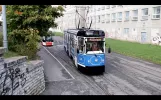
Christmas tram in Tallinn (2017)For Christmas time, a Christmassy decorated tram drove around Tallinn.
Santa Claus was behind the wheel, and for some odd reason, a bunny was onboard and gave children sweets.By MsTallink - .
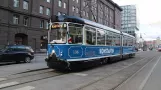
Tallinn tourist line Konstantin with articulated tram 136 at Talllinna Ülikool TLÜ (2017)By Silas Boye Nissen..

6:33
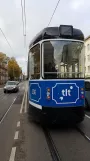
Tatra KT4 TMR #136 on a test run (2017)Retro tram nr 136 on a test run. The tram is named after Estonia's first President Konstantin Päts. Trams are retro looking, but full of modern electronic stuff. Together they're renovating 6 trams and jobs are done in Estonia. After successful test's they'll serve route nr 3.By MsTallink - .