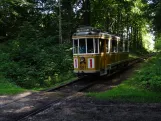
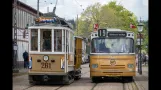
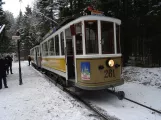
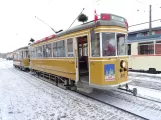
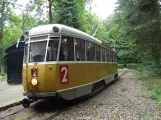
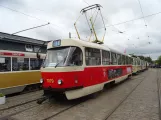
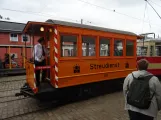
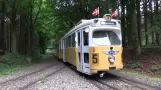
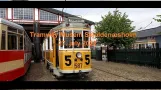
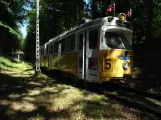
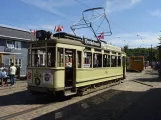
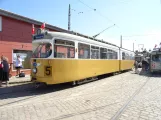
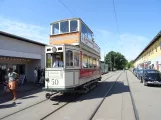
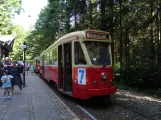
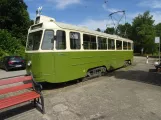
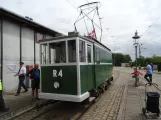
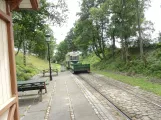
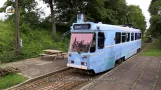
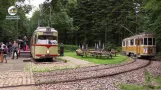
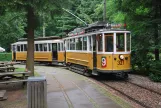
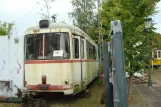
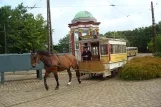
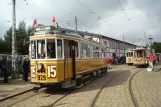
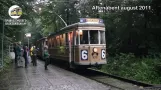
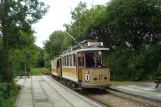
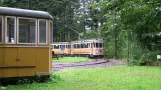
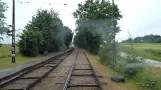
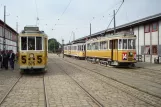
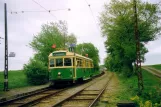
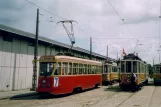
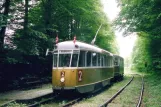
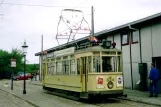
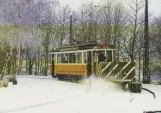
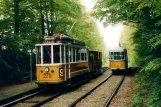
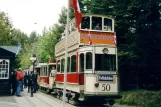
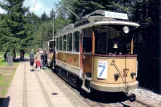
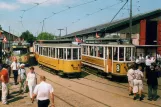
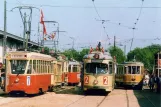
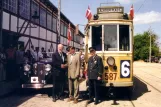
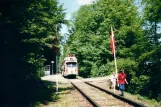
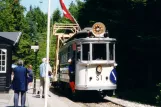
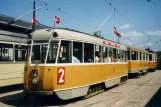
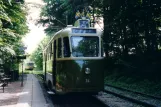
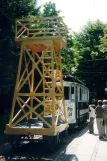
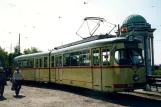
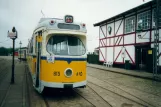
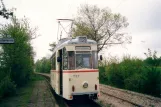
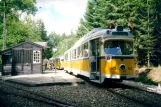
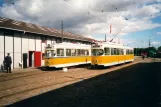
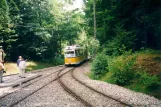
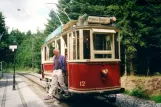
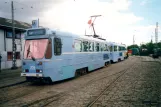
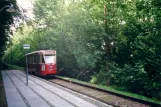
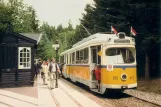
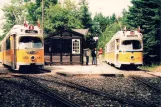
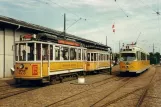
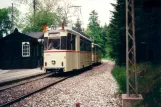
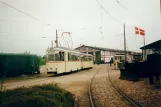
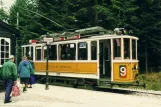
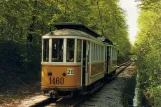
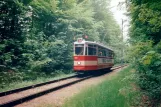
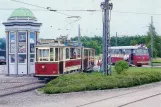
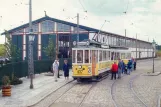
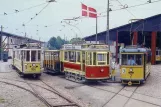
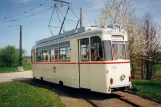
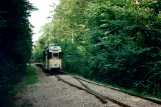
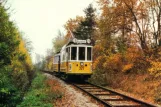
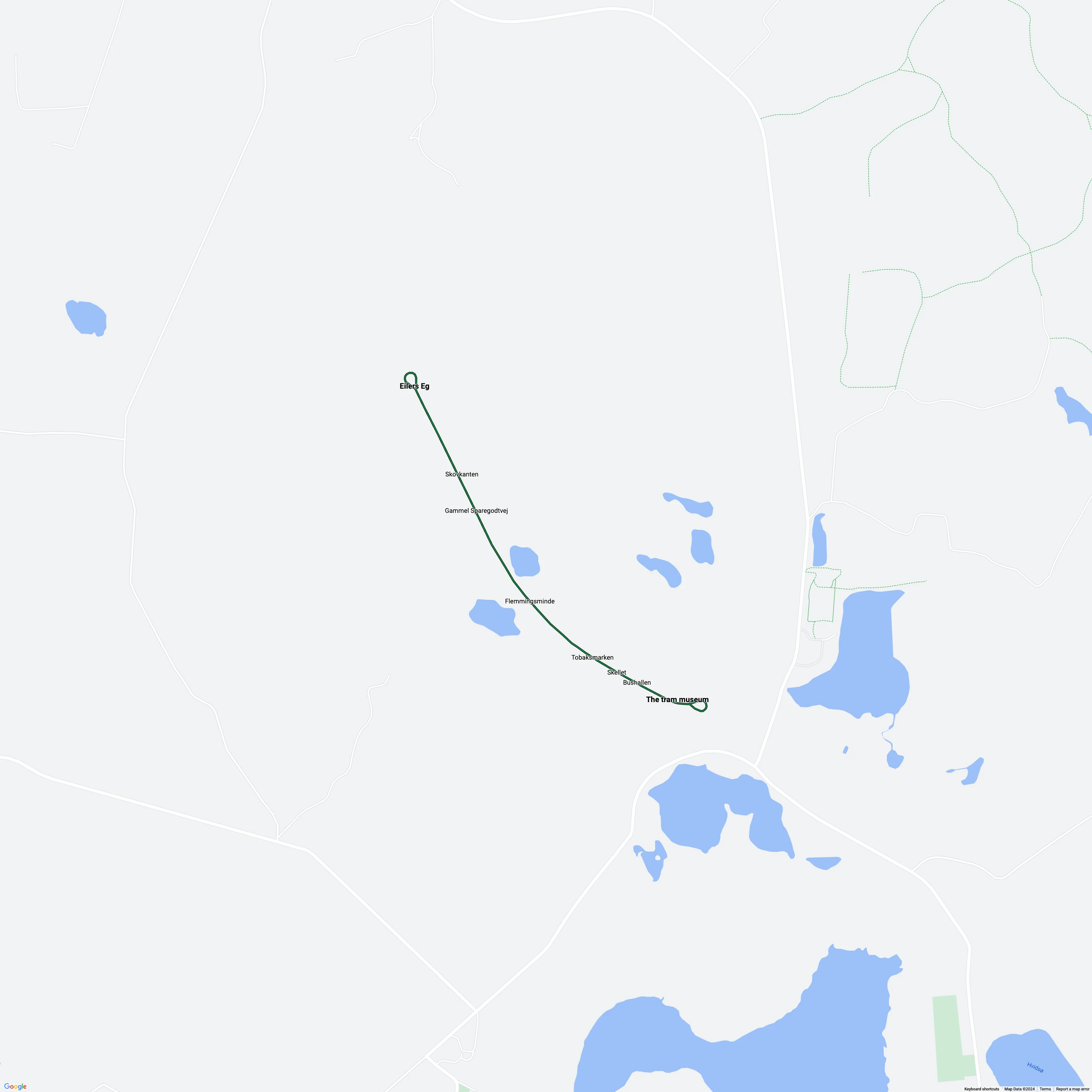
Skjoldenæsholm standard gauge: The tram museum - Eilers Eg
OperationalCity: Skjoldenæsholm (Denmark).
Total route length: 1.7 km (1.1 miles).
Track gauge: 1435 mm (standard gauge).
Opened: .
Museum lines in Skjoldenæsholm
Skjoldenæsholm metre gauge: The entrance - The Tram Museum
Operational
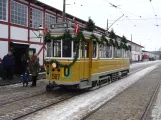
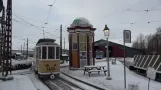
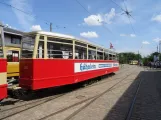
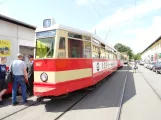
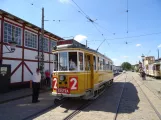
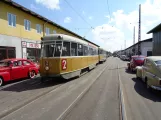
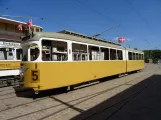
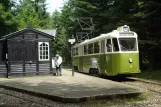
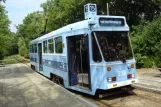
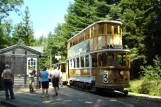
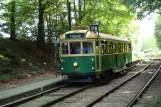
Skjoldenæsholm standard gauge: The tram museum - Eilers Eg
Operational
Stops
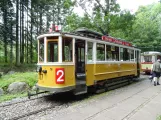
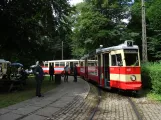
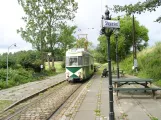
The Tram Museum → Valby Gamle Remise → Bushallen → Skellet → Tobaksmarken → Flemmingsminde → Gammel Sparegodtvej → Skovkanten → Broen → Eilers Eg.

View the route map in high resolution.
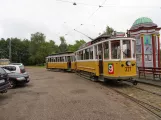
Photos and videos of Skjoldenæsholm standard gauge: The tram museum - Eilers Eg
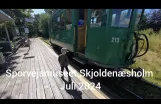
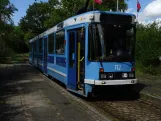
2:40
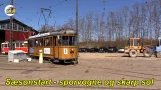
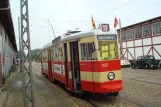
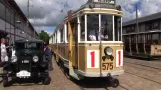
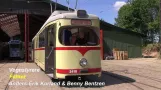
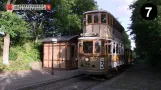
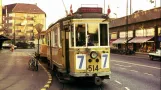
Tram Museum - KS 567 is back in operation after 2 years (2025)Perfectly restored, absolutely fantastic. Like everything else you see at the museum.By Trafikpladsen - .
18:55
The Tramway Museum Skjoldenæsholm video (2024)A short video from the Tramway Museum Skjoldenæsholm.
A look at their workshop and exhibitions.
Nice exhibitions of trams and buses. And there is the possibility of driving with several trams in the area.By VærdAtSe - .
Skjoldenæsholm standard gauge with articulated tram 112 at Gammel Sparegodtvej (2024)By Henrik Boye..

13:15
Tram Model Exhibition in the Danish Tram Museum Skjoldenæsholm (2024)Nice and exciting video from the tramway museum. I enjoyed watching it very much. Looks like there were more running models than when I was there :) Nice to see the double-decker number 50 in action, along with the other nice trams.By HStrab - - .
10:54
Traffic day at the Sporvejsmuseet Skjoldenæsholm (2024)On Saturday 11 May there was an intensive traffic day at the Skjoldenæsholm Railway Museum. So a large number of the museum's various trams, buses and a number of vintage cars were also on display.By SimonTog - .
4:31
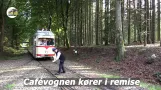
Sporvejsmuseet - The café car runs in the depot (2023)When the last guests have left, the café car also drives into the depot. We followed it on the trip from Ejlers Eg to Remise 1.By SporvognDK - .
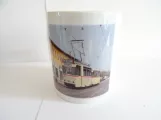
Mug: Skjoldenæsholm standard gauge with railcar 797 (2023)By Henrik Boye, Sporvejshistorisk Selskab (SHS)..

12:33
The tramway museum in Skjoldenæsholm (2023)Intensive traffic day with trams every 5 minutes, as well as vintage cars and buses. Not all trams ran with passengers, but ran for the photographers.By jvltog - .
4:26
Model tramways at the Tram Museum Skjoldenæsholm (2022)Exhibition of various German model tramways at the Tram Museum Skjoldenæsholm 27. July 2022.
---
Titel music: Chris Haugen - Fun in the sun.By Nordic Tram - .
5:24
Tramway Museum Skjoldenæsholm 🚎 | Denmark (2022)The Skjoldenæsholm Tramway Museum is located at:
Skjoldenæsvej 95.
4174 Jystrup (Midtsjælland)
Telephone: 57 52 88 33
Email: info@sporvejsmuseet.dk
Homepage:
www.sporvejsmuseet.dk
Prices (Year 2022):
Adult - DKK 150.
Child - DKK 75.
Groups (Min. 20 paying guests)
Adult - DKK 130.
Child - DKK 65.
[Child rate applies to 3-14 year olds]
Sporvejsmuseet Skjoldenæsholm, also known as Skjoldenæsholm Tram Museum, is a museum located in Denmark. It dedicates itself to the history and preservation of trams, trolleybuses, and other forms of urban transport. Here is some key information about the museum:
1. *Location:* Sporvejsmuseet Skjoldenæsholm is located at Skjoldenæsvej 107, 4174 Jystrup, Denmark.
2. *Collection:* The museum houses an extensive collection of historic trams, trolleybuses, and related artefacts. Visitors can explore different types of trams that were once in use in Denmark and other countries. Some of these trams have been beautifully restored to their original condition.
3. *Exhibitions:* The museum provides an insight into the development of public transport in Denmark and around the world. You can learn about the development of trams, their role in urban transport, and the technology behind them.
4. *Tours:* One of the highlights of the museum is the opportunity to take a trip on vintage trams and trolleybuses. It offers a unique, nostalgic experience for visitors.
5. *Events:* Sporvejsmuseet Skjoldenæsholm holds various events and exhibitions throughout the year, making it an engaging destination for both transport enthusiasts and families.
6. *Cultural heritage:* The museum plays an essential role in preserving Denmark's tram history and educating the public about the importance of historic trams.
Note that specific details about the museum, including exhibitions and events, may change over time, so it's a good idea to check the museum's official website or contact them directly for the most up-to-date information before planning a visit.By Kramers Creations - .
1:01
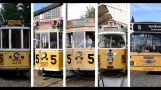
The tramway museum marks the 50th anniversary of Denmark's last tram (2022)Sporvejsmuseet marks 50 years of Denmark's last tram with a cavalcade of line 5 trams and buses on Saturday 23 April 2022 10-17By SporvognDK - .
3:07
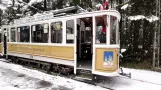
Christmas at the Sporvejsmuseet Skjoldenæsholm (2021)For the 31st time, the traditional Christmas event featuring mulled wine, apple slices, a visit from Santa Claus, and the sale of Christmas trees took place at Sporvejsmuseet Skjoldenæsholm on the weekend of December 11 and 12.By SporvognDK - .
11:39
The Tram Museum Christmas Part 3 (2021)This video is part 3 of 3
Clips in the video are recorded using the Oppo Find X3 Pro and the Vivo X60 Pro+By Dinglehopper - .
10:17
Skjoldenæsholm Tram Museum Christmas Part 2 (2021)This video is part 2 of 3
Clips in the video are recorded using the Oppo Find X3 Pro and the Vivo X60 Pro+By Dinglehopper - .
12:53
The Tram Museum Skjoldenæsholm Christmas, part 1 (2021)This video is part 1 of 3
Clips in the video are recorded using the Oppo Find X3 Pro and the Vivo X60 Pro+By Dinglehopper - .
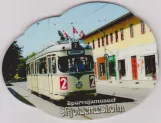
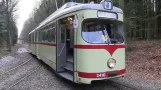
Fridge magnet: Skjoldenæsholm standard gauge with articulated tram 2412 by Depot 3 (2021)Den første "Düsseldorfer" i de københavnske gader. Udlånet fra Düsseldorf som prøvevorg i 1958. Den tilhører museet.
Foto fra Sporvejsmuseet Skjoldenæsholm
SHS-36 Made in Denmark
www.pictofix.dkBy Henrik Boye, Sporvejshistorisk Selskab (SHS), Thomas Bochorst - .
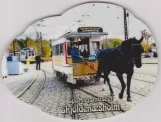
Fridge magnet: Skjoldenæsholm standard gauge with horse-drawn tram 51 "Hønen" on The Tram Museum (2021)"The Hen". Copenhagen's last horse-drawn tram, which ran until 1915. Runs on special occasions at the museum.
Photo from the Skjoldenæsholm Tram Museum
SHS-30 Made in Denmark
https://pictofix.dk/.By Henrik Boye, Jesper Villandsen, Sporvejshistorisk Selskab (SHS) - .
Fridge magnet: Skjoldenæsholm standard gauge with railcar 7079 at Broen (2021)Museets nye Tatra sporvogn, som er den type, der er bygget flest af i hele verden. Den har kørt i prag siden 1985.
Foto fra Sporvejsmuseet Skjoldenæsholm
SHS-41 Made in Denmark
www.pictofix.dkBy Henrik Boye, Sporvejshistorisk Selskab (SHS), Thomas Bochorst - .
Skjoldenæsholm standard gauge with service vehicle 13 (721 040-0) at Flemmingsminde (2021)By Henrik Boye..

0:46
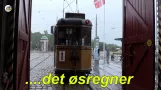
The Tramway Museum - It's raining... (2021)On 6 July 2021, we got a decent amount of rain in the afternoon.By SporvognDK - .
1:45
The Tramway Museum - overhaul of Oslo Sporveier 203 (2021)Oslo Sporveier 203 is a HØKA tram that was added to the museum in 2000. The tram was originally built in 1953 and renovated in 1983. After a derailment in 2019, the tram requires an overhaul of the bogies.By SporvognDK - .
10:07
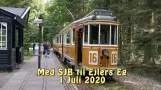
With SJB to Ejlers Eg - Sporvejsmuseet Skjoldenæsholm (2020)In July 2020, SJB took a ride behind the wheel on KS 587 to Eilers Eg, at Sporvejsmuseet Skjoldenæsholm's usual track section. Along the way, some information is shared about the stretch, both with text and with one of the museum's knowledgeable conductors in the background.
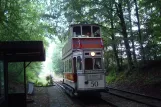
With SJB heading to Eilers Eg (Eilers Oak), the forecourt is where the trams leave for the forest. Welcome aboard Line 16 from Copenhagen. I won't say too much yet, except that you might find this an unusual place for city trams to run through the forest or the gold court. So, we’ve tried to make this first section feel a bit more city-like by adding scenery meant to look like shops; however, they aren't real shops, just 1.5 meters deep. They're decorated with various items I'd like you to enjoy. I'll be quiet for a moment. The museum street Tobakmarken (Tobacco field), opened in 1985 and closed in 2017, marks where the line becomes single-tracked, with signals controlling traffic. On the left, the signals are marked with "S" for stop and "I" for go. I also want to tell you about the trams you're riding in. They originate from the Copenhagen Tramways and are part of a class that includes 118 motor cars and 83 trailers built in the 1930s. By this time, the first electric trams from 1901 to 1910 were showing their age. The fact that they ran until 1966 is a story in itself, but that’s why this class was built. Design-wise, they turned out well, with both motor cars and trailers now identical, unlike at the start of the 20th century. This class lasted until Copenhagen's last tramline closed in 1972. Tram 587 was built in 1940, making it one of the later ones in the class. Flemmingsminde (in memory of Flemming), opened in 1987, is where we are now, at a stop called 'Flemmingsminde." On our right, there's a small shed serving as a waiting room, initially placed at Vestre Kirkegårds Allé when the tram line was served by horse trams in 1893. It is 127 years old. When electric trams were introduced, they continued to serve. After buses took over, the area became obsolete as a waiting space, because buses could now go directly to the graveyard. The stop is named after a society member who fell over a mast for the overhead wires in 1985—the remains of the toppled mast can still be seen next to the first mast on the left. After the tram service ended here, the waiting room was used as a tool shed by graveyard workers, allegedly made out of old gravestones. Inside, there's a small exhibit about the railway the tramway was built on—the Midland Railway, which only operated for 11 years before closing. We’re now approaching "Skovkanten" (Forest's Edge), signaling we're entering the forest. Here, we'll pass another tram from today—a double-decker from 1900. Fun fact: Copenhagen was the only Scandinavian capital to have this tram type. Your tickets are valid on all trams, so if you want to ride the double-decker, feel free. Skovkanten opened in 1990. The tram passes Gammel Sparegodtvej (Old Sparegodt Road), where the driver rings the bell to alert pedestrians. On the left, you can see the stop of the same name. Broen (The Bridge), opened in 1993 with a new platform added in 2018, is the next stop. It’s named "Broen" because of the nearby bridge about 50 meters ahead, built where a railway once ran, and a road crossing was needed. The bridge is still owned by BaneDanmark (rail infrastructure), who occasionally check its condition rather than replacing it. It's also a popular photo spot for tram enthusiasts. We'll soon reach the terminus, Eilers Eg (Eilers Oak), and after a short break, we'll head back to the museum. You're welcome to stay on or get off and walk in the forest. Eilers Eg opened in 1999. Here, the tram enters a loop and passes the museum's café, with a tram from Düsseldorf to the right. The tram attendant is just reminding passengers that trams run at 10-minute intervals. The tram on the left is a mockup used on a Copenhagen school’s playground, replacing an old trailer. You can enjoy food that's been brought along, even if the weather’s bad. The waiting room to the right, located initially at Fruens Bøge (the lady's beech), is now part of the museum, donated by Odense City Council. More info about the museum: www.Sporvejsmuseet.dk. Thanks for riding with us!By SJB Media 1996 - .
7:01
Sun, clouds and autumn at the Railway Museum (2019)A little autumn atmosphere from the beginning of September.By SporvognDK - .
4:51
Aarhus at the Tram Museum (2018)A trip to the Skjoldenæsholm Tram Museum. We would pick up an old ticket machine for our old Aarhus bus. The museum has preserved several old Aarhus trams and buses.By Flemming Berg Olsen - .
7:32
Model railway exhibition at the Tramway Museum (2018)In the 2018 season, Sporvejsmuseet Skjoldenæsholm marked its 40th anniversary with a number of events throughout the year. One of them was a large model railway exhibition with several foreign guests. The film here shows an extract from the exhibition on 28 July.By SJB Media 1996 - .
12:26
Tram model exhibition '40 years of the Skjoldenaesholm Tram Museum' (2018)Tram model exhibition '40 years of the Tram Museum in Skjoldenaesholm'.By HStrab - - .
6:58
Harrild Railroads - On visit 003 - The tramway museum at Skoldenæsholm (2018)Harrild Railroads was out studying track and machinery 1:1 at the Railway Museum. It was a thoroughly positive experience that can be recommended.By Harrild Railroads - .
5:22
The Straßenbahn Museum (2018)Visit to the Sporvejsmuseet Skjoldenæsholm June 2018.
Don't forget to "Like" the video if you liked what you saw and Subscribe to the channel for more of my videos.
Don't forget to "Like" the video if you liked it, and subscribe for more videos.By Mikkel Graugaard Hansen - .
2:31
The Tramway Museum's vehicles - Prague 7079 (2018)I grew up in Romania with exactly these kinds of trams in exactly that color. Most of them are still running, some in more or less good condition. Great to see it in Denmark too.By SporvognDK - .
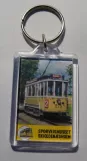
Keyring from Tram Museum Skjoldenæsholm (2018)Sporvejsmuseet SkjoldenæsholmBy Henrik Boye, Sporvejshistorisk Selskab (SHS) - .
5:10
Members' Day (2017)On 29/7 - 2017, Sporvejsmuseet Skjoldenæsholm held their annual "members' day", which ended with a diploma run.
This year's "surprise" was KS 567 and 226.By SJB Media 1996 - .
2:34
The Tramway Museum - Spring preparations (2017)On April 8th, the museum's employees prepared for the season's opening on Sunday, April 16th.By SporvognDK - .
Postcard: Skjoldenæsholm standard gauge with railcar 797 outside Remise 3 (2017)"Reko-Wagen 35" type TZ 70 (bidirectional vehicle) built in 1975 at the "Roman Chwalek" repair shop in Berlin-Schönweide (mechanical parts)
VEB Lokomotivbau Elektronische Werke "Hans Beimler" in Henningsdorf (electrical parts)
Reko-Wagen type TZ 70 (bidirectional vehicle)
built in 1975 at the "Roman Chwalek" repair shop (Reichsbahn repair shop) in Berlin-Schönweide (mechanical parts)
VEB Lokomotivbau Elektronische Werke "Hans Beimler" in Henningsdorf (electrical parts).By Henrik Boye, Karsten Paetzold, Rostocker Straßenbahn AG - .
15:01
Lucca drives a tram (2016)Lucca tries to drive a tram at Sporvejsmuseet Skjoldenæsholm.
Please turn on the power and ring the bell before we start moving. Hard step like this, then it comes here toward me, and you take one more step. Stay right here with a high B on zero while we review this sporty section. Queue up here toward me and take another step. If there are two, it doesn't matter; we have K SK, not too much. Take one more step. Yes, then we’ll soon come to a stop. You need to drive back to zero, ready to brake. Pull it toward yourself to start with one. Hit one more, then again, again, and again. One more time, then the last one. You’ll see a signal with an 'S' indicating 'Stop'. Change the signal so we can get ready. Please ring the bell once before we drive. Queue up here again, then stay right until you hit the switch. Drive it back to zero, then you can do that now. Drive toward me—one, two, three, four, five. More, now more. One more here, then again. See how it goes. Okay, now we stop here. Return to zero. Be ready to brake—you take one, then one more, again, again, and again. Quietly and calmly, brake softly; it’s nice here. Back to zero. As soon as we stop, we drive again—ring the bell. Drive toward me with one more, then again. One more. Last one. We’ll come to a switch soon, where we’ll drive slowly in, then back to zero. Start braking with the Brake Switch—one more now. Stay at the switch until we get closer to the stop, then brake further down—no further, and again, again. The last one, then back to zero. Stop gently. Drive toward me again—one more. Nice, then back to zero. We’ll do one-two here toward me—no, the other way, the other way—toward me, then back to zero. There’s a crossing now, so ring the bell a few times. Come in. Great, then drive back toward me—one more, and again. One more, then again. There’s a stop down here on the right, so soon you'll go back to zero. Do that now, then start braking and continue without me saying anything—brake a little more, then back to zero when we stop. Ring the bell, then drive back. Drive toward me—one more, then again. One more, then back to zero. Approach with the switch in—good. Then back to zero again. Now, throw the switch toward me. Then it drives. Yes, you hit exactly where you need to, like that, and then back to zero. Now we'd better wait until he's filled up a little—that green one with the signal that says 'S' over there. Now we're going out and telling the signal system that we'd like to run when it's free. So now you're going out to work outside. I'm going to have to go all the way over there in the rain. No, it's not that much right now. Look here, here. Look, you hang it so that it hangs down there, then you turn it one way or another. Look, now the light came on in there. Then we've told the signal system we'd like to run it when it's free. So, we can get into the tram and get ready on that side toward me. R, R, you hit it fine; when you hit the switch, you drive it back to zero. That's enough. Who wants to own it? One more. And one more. And one more. Then it just runs. If you turn, then you drive back to zero. Right when you're underneath the bridge, you take a quick brake check. I'm all the way up to number five for Yes. We need to maintain the right speed. We're speeding up, then back to zero, and then you have to start braking with a Brake Switch one more time. Now, and one more there. Next, and one more thing. And the last one too. Okay, we can drive first, says the horse. Back to zero. Yes, then you ring the bell, and then you drive here toward me with a switch. Yes, nice, and one more. And then it returns to zero due to the next switch. We come to the very board switch, so there. Shall we drive quietly in? So, you can take two. The brake control signal says, 'What can we drive?' Yes. Then you give it a quick beat. Yes, FL. Then you drive back. Lucca tries to drive a tram at Sporvejsmuseet Skjoldenæsholm, K to NE. Then we drive one, two, three, four, five—here toward me. Yes, here toward me. And one more, one more, and then back to zero, because we will soon reach SK. What is the name of this stop here? Now you start to brake with a Brake Switch, and one more. And one more. By Jeppex - .
18:25
Hamburg tram trailer 4384 restored and back in service (2016)Hamburg V7BE 4384 back in passenger service after 41 years
Manufacturer: Orenstein & Koppel (1957)By HStrab - - .
Skjoldenæsholm standard gauge with bilevel rail car 22 in front of The tram museum (2016)By Henrik Boye..

2:50
The Tramway Museum - Right now 9 (2016)A mood report from the museum on 2 July 2016.By SporvognDK - .
33:36
Tram Museum Skjoldenæsholm/DK, moving to Depot 3 (2015)Tram Museum Skjoldenæsholm/DK,
Move from the 'Elephant House' to the new Depot 3.By HStrab - - .
4:54
Hamburg trams, night shots in Skjoldenæsholm (2015)Hamburg trams (V6E, V7BE and PCC 3060) travelling at night in the Danish tram museum Skjoldenæsholm, August 2015.By HStrab - .
4:45
The Tramway Museum - Traffic Weekend (2015)On Saturday, July 25, and Sunday, July 26, 2015, the Skjoldenæsholm Tram Museum hosted its annual traffic weekend.
Around 2:00 p.m., on the way back to the museum, we passed the newly built Depot 3, where the first two tracks are now complete — a scene even passengers on horse-drawn omnibuses can enjoy. Museum manager Michael Lund was busy, as guests from Germany arrived and needed guidance to their parking spots at the maritime university, which is one and a half kilometers from the Tramway Museum. Several vintage car owners waited eagerly for the tour to continue at the museum. The tour first circled Valsø's smaller lake, with Copenhagen's Royal Tiger tracks guiding the way. Upon arriving at the museum, the vintage cars were greeted by the organizer, Veterans, who distributed informational materials to the participants. Despite a heavy daily rainstorm, the Tramway Museum managed to avoid heavy rain on Saturday morning. After a few hours of visiting, the German guests prepared to continue to Sweden. Leaving the museum was orderly, with horns and lights used to signal.
At 2 p.m., the awards ceremony for the vintage cars took place. One of the winners was Erling Roland Petersen, with his 1957 M 1000, of which I am the fifth owner. It originally ran on Funen, and when I bought it, I picked it up in Jutland. I first visited it in 2000, and it was an exciting experience; I was fortunate as well. My lady and I previously won prizes for best costume, and today I was lucky enough to receive an award for the best-looking car of the year. The guests had an unexpectedly extraordinary experience—a good old-fashioned punch from the Bostok truck train. The truck train couldn't drive back to the museum under its own power, so assistance was requested to pull it. Is anyone available to signal after the Bostok truck train has been moved? Can the other trucks start their trip back to the museum? The museum closed at 5 p.m. and reopened at 5:16 p.m. The café truck, as the last vehicle to leave, was also part of the return journey. On the way back, Melb's cart, although on the road, still operated smoothly under Eif Petersen's expert supervision. There was plenty of space, and the café truck was able to drive into the shed after a long day in the forest.By SporvognDK - - .
7:20
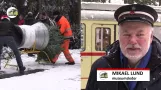
The Railway Museum - Great Cavalcade Day I (2015)On the occasion of the Railway Historical Society's 50th anniversary in February, the Railway Museum held a cavalcade with 68 of the museum's vehicles on 20 June 2015.
In the first episode, you can see the speeches by museum manager Mikael Lund and Ringsted's mayor Henrik Hvidesten (V).By SporvognDK - .
7:45
The Tramway Museum - Great Cavalcade Day, II (2015)On the occasion of the Tram Historical Society's 50th anniversary on February 8, 2015, the Tram Museum Skjoldenæsholm held a cavalcade on Saturday, June 20, 2015, with all ready-to-run museum vehicles arranged in order by date of acquisition
Content:
00:00 Start
00:17 Copenhagen Trams KS 587
01:10 NESA tower car 501-02
03:20 About the establishment of a tram museum
04:30 Copenhagen Trams grinding car S1
04:40 Snow sweeper
04:50 Tower for line maintenance
05:35 Copenhagen Trams KS 22
07:00 Copenhagen Trams 389/1172
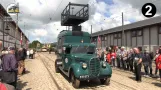
When the trams in Copenhagen were retired, they acquired a larger collection of trams, which were given to them by the trams themselves. One of these, 587 line 8, is standing in front of us. It was built in 1940 and was in service until the very end. From the trams, they received four Buggy carriages, two engines, two sidecars, and two trailers, one of which we will see in a moment. The carriages were stored in the Svanemøllen depot, where our members could work on them. 587 has recently been refurbished here at the museum, so it now appears in a beautiful and nearly new condition. The next carriage that arrives may perhaps show more versatility, as it wasn't just trams and buses; work vehicles are also part of the collection. And here comes our bus with our beautiful 1938 Ford V8, Nesa F 50102, an automobile tower carriage used for wiring repairs. This is done from the platform on the roof. The carriage is ejected by a hydraulic pump, allowing it to be used. The handle, the small wheel at the top of the tower, can lift the tower to quite a height, and as you might notice, the carriage is not equipped with support legs, so when the tower is fully raised, it’s quite an experience to stand up there. The last time the carriage was used was, among other things, during the establishment of street lighting at Lyngbyvejen to enhance the street's profile, where the carriage could be utilized. Since then, it was brought here for maintenance and then taken to Dong to be restored. The carriage has been refurbished at Nesa and Dong's workshops. I can tell you that when the carriage was poorly repaired, it had to be presented to the members of the Association, which happened at our annual Members' Day, where all members are invited. And there we were, about to demonstrate the carriage and talk about it when it started running. Yes, there was actually damage, so the carriage is usually exhibited inside the Valby Remise, with an opportunity to look into the box at the back, where a small workshop has been set up for on-site repairs.
I mentioned earlier that they were working on establishing a tram museum. The association's management saw that the project in Brøndby was unlikely to be feasible, so they decided instead to advertise in various newspapers, including local papers on Zealand, both to find space for a sports museum and to store trams because they expected that after the closure of track operations in Copenhagen, it would no longer be possible to store trams there. They contacted a nearby farmer, who recommended the landowner, Vilen Brundin Nergaard, at Skørn Desholm Estate. This was done on December 23, 1971, and communication was immediate and positive. He was farsighted and thought it was a good idea to have a sports museum at Skørn Holm. In 1972, they took over a barn, and this is the carriage that arrives. Here, Copenhagen's tram S1 has a snow wagon mounted in front, used to clear snow from the streets.
Similar wagons featured a salt grinder, allowing for the addition of salt as well. A tower is mounted at the back to keep it on the track. S1 was built in 1900 as a two-story traffic control vehicle. Two years later, it was converted for overhead line operation, and in 1924, it was modified into a single-story tram. In 1952, S1, also known as number 23, was converted along with a sister vehicle and operated as a rail-based tram until its closure in 1972. The SS took over both wagons and began converting S2 into a traffic control vehicle in the form of a double-decker, as it appeared after its 1924 conversion. However, one of our members, the man behind our department on Bornholm, believed that a double-decker was too dull, so he initiated a project to restore S2 to its original 1915 version, featuring a closed front and rear by the driver and the addition of a first floor to provide cover and style. Now, it’s back in regular operation here at the museum and will be able to run in traffic today. At the back is the open sidecar 389, built in 1909 and retired as a museum piece in 1936. It later belonged to the HT Museum, and in 2003, it was acquired by the museum. Open sidecars were common in Copenhagen until 1936, when they were taken out of service; most were then sold to tram operators in Helsinki.By SporvognDK - .
6:31
Sporvejsmuseet - The new café car handed over (2014)On 2 April 2014, the new café cart was handed over to the Café Cart team.
I am now at a point where Team 100 can hand over 2410 to the Café wagon staff, not because we are finished with it, but because it is now in use. The wagon is essentially complete, but some exterior installations still need to be finished. Of course, future changes will be made as we gain more experience with the wagon's operation. In 2002, Per Tingman suggested that we should have a café wagon. The wagon train was designed for this purpose. Test runs were conducted to ensure the track was suitable, preventing coffee from overflowing into the cups. Ultimately, the wagon train had to stand in the loop. I made a salad; otherwise, everything would lie and float on the floor.
At that time, there were seven girls—the seven cool ones—who operated the wagon, and the general opinion was that the Café wagon had two sals from the kiosk. Gradually, funds were allocated for purchases and chests of drawers. They are actually the same as the ones we use today, and most of them have been sold. The Café wagon provided a sales island, so the RS AG 924 k is now a Café wagon. In 12 years, it will return to its original purpose of being a biv. It was a spy several times in history, but in 2011, it was finally adopted by rebuilding. The first thing that happened was that J cleaned the inside in one day. Perhaps most noticeable was the exterior painting, which J also completed.
Per and Claus took care of the electrical installations, while Køren handled the underground work. I mention just a few details, but overall, 10 hours have been spent on this project. Now, we leave the Café wagon to the network and the Café wagon staff, and I hope you will be happy with it. Take good care of it now, as it was initially costly. Of course, some things need to be changed, but let's see how it performs in daily use. Then I would say, 'Let's celebrate its use with three cheers and long live the Café!' I also think it's great that we can celebrate today, so let’s make this an official handover of the wagon. It has been a project that took longer than expected. We initially thought it would be operational last year, but it takes more time.
On the other hand, I believe that we’ve covered many details about the wagon, and there has been excellent sparring with the café wagon team to ensure the interior meets your wishes. I think it’s a wagon we will be delighted with. I am also pleased that the Rostok side wagon can now return as a side wagon for the newly renovated 97. Now that we have 2410, I think it has been very nice to have equipped it for this purpose, and I believe it will be a great success. Finally, I want to thank everyone involved in the project. There are quite a few more than Team 100—those who were most involved—but many others contributed as well, and I think we owe them a thank you. Also, thanks to the treasurer for approving your overruns. Yes, cheers! It will be a valuable asset for us, just as we envisioned when we started this project. This has been a full-time effort on behalf of the café team. Thank you very much for the excellent café cart. I am pretty confident it will meet our expectations, both now and in the future. I am really looking forward to beginning use with the first trial run. I will see if any adjustments are needed after the first day, but I am confident that, together, we’ll figure out how to make it work really well. Thanks also to everyone who did quality work.By SporvognDK - .
2:01
The Railway Museum - From the archives 1 (2014)In this first episode, we show something from the film archives from spring 2014By SporvognDK - .
2:01
The Tramway Museum - From the archives 2 (2014)In the second episode, we show something from the film archives from spring 2014By SporvognDK - .
8:31
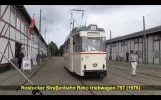
Sporvejsmuseet - Rostock tram Reko railcar 797 (1976)After restoration by the tramways in Rostock (RSAG), motor car 797 is in operation at the Sporvejsmuseet SkjoldenæsholmBy SporvognDK - .
Skjoldenæsholm standard gauge with horse-drawn tram 51 "Hønen" in front of The tram museum (2013)By Henrik Boye..

2:01
The Tramway Museum - From the archives 9 (2013)In August 2013, the Golf Club organized a tournament "Skjoldenæsholm Open".
Sporvejsmuseet Skjoldenæsholm awaited the golfers with, among other things, hot coffee at the overhang at Tobaksmarken.By SporvognDK - .
2:01
The Tramway Museum - right now - part 1 (2013)Atmosphere, rainy weather, and visits by happy photographers - The Tramway Museum on Sunday 26 May 2013.
For those of you who think we have photos and experiences, we should have a box, fewer videos, 65, see something in you, or latte, whether it is water or rice Sandow immediately, as soon as Brierly, want to learn a language, Artica, now four Lono Picasso lesbian tube heater, have public against it, search for spinach, which is already their storefront times, or nice, not for crimes, want something fantastic.By SporvognDK - .
8:01
The Tramway Museum - Visit by Jørgen de Mylius (2013)The well-known radio personality and DJ Jørgen de Mylius visited Sporvejsmuseet with his family on Sunday, 28 April 2013.
In addition to trying his hand as a coach driver, he also talks briefly about the memoir "Thanks for all the music."
In January, Jørgen de Mylius celebrated his 50th anniversary at Danmarks Radio. To mark the occasion, he wrote a memoir titled "Thank You for Everything." In his musical journey, he reflects on over 50 years of experience with music. However, he also discusses his interest in the track, as he describes it himself. I had a chat with Jørgen de Mylius about his fascination with the track, but first, we're going out for a ride on the track with Jørgen de Mylius as the driver. You should be allowed to take control sometimes, so I am sure that... Have you turned it on? Have you turned it off? Now Ling Bu is coming like this? Do you give it one, two, three, four, five? Yes, okay, like this? Have you seen Ling Bu's girls? It was the one that only drove past the animal school, and then they were marked up. I teach my girls a little bit. Yes, of course, high. Yes, you definitely need that. I say yes, give two rams, thank you. Yes, we are looking at the signal. No, I. Then you give a contact to increase the number up to three until you reach the switching track, like this. No, I. I drove it so often, especially to Aarhusgade depot, because he often got off there and then back in zero years; his name is Larsen. It was so sweet of a father; I was always allowed what I could stand. Now, now we give it Pl again. Ah, how nice it is, Jørgen de Mylius. You have just been driving a car with the number 437. When we look at the annual report from the FR Tram Museum from 1984, you were also out driving in the same car. How did you feel about the reunion? What? Yes, nice reunion. I love both the sound of the tram and the general spirit of a tram. I still feel that way. I think it was terrible that those mayors—and the mayor and his apprentices—when they decided to abolish the trams, did not realize that closing some lines was not the way forward; they should have at least kept 10 or 8 of the lines. It was much, much better than those buses; rather than throwing all that away. You describe your interest in the track in the book you wrote about your 50th anniversary in Denmark, "Thank You for Everything." The music there describes your interest in the track, which dates back to childhood. Yes, it was kind of like that. It was because the music came in and took over a bit. There was an overlap, I would say, but it took over that interest. Before that, I spent most of my free time riding the tram. Many other healthy boys stood there, writing license plates on cars and doing strange things. However, I became interested in trams and categorized them with a good friend, Leif Sundby, who was then known as Leif Larsen, with whom I was in class. We drove around and then kept a note at home for every single tram we discovered. Oh, and our hobby was driving around, seeing if they were signposted from line nine to line 15 because that's what they did every now and then. If you suddenly saw a train of cars broken down, they would take one left over on line 15 and re-signpost it to line n9, and similar actions would be taken. That was our hobby, and through it, I also got to know Copenhagen in a really fantastic way. We cycled around every year; for my birthday, I got a tram network card—my biggest wish each year. It was at the top of my wish list, and I received a network card. You also describe your interest in the sport in your book as a special interest, but it developed a little later in life, when you started doing pokis on DR. There, a participant named Claus Petersen appears. Yes, and what's funny about him was that he came in, and I finally found a mate who was just as interested in rock music and pop music as I was, and with whom I could talk. I always felt a bit alone in the '60s; on the radio, there was only me interested in pop and rock music. I was also the only one who played it and talked about it with SP. I didn't really have anyone to talk to. When I sat with colleagues, some weren't really interested—they actually had other priorities. So, suddenly, I met someone who was really into it with life and soul, just like me. One day, he said to me, 'By the way, I've read some interviews with you,' and we discovered that we shared a different interest. It turned out that, although he was four years younger, he was also hugely interested in trams. I think that was fantastic. We both had two slightly different interests—partly and partly. But many people interested in music took it so seriously that we went into detail, and we did the same with the track. Our shared interests and work also led us to go to the Tram Museum in 1979 to record some sessions with the Lollipops. He was also exceptionally skilled in music, and I hired him to assist me with various programs.By SporvognDK - .
8:23
Sporvejsmuseet Skjoldenæsholm - from Eiler's oak to the front plate (2013-2016)A lot has happened in 3 years, as you can see. Among other things, the museum is undergoing a significant expansion with the addition of new exhibition halls and sheds.By SJB Media 1996 - - .
Postcard: Skjoldenæsholm standard gauge with railcar 929 at Eilers Eg (2012)NESA 929 as a Christmas tram in the loop at Eilers Eg, December 2012.By Henrik Boye, Sporvejshistorisk Selskab (SHS) - .
10:02
The tramway museum - The horse-drawn tram Hønen (2012)On Sunday 7 October 2012, the horse tram Hønen was out running with a real live horse - see here Kurt Berg's recordings from the day.By SporvognDK - .
Postcard: Skjoldenæsholm standard gauge with railcar 575 in front of The tram museum (2012)Busy on the forecourt. KS Lunding railcar 575, horse tram KSS 51, Flensborg railcar 36 and Melbourne railcar 965, October 2012.By Henrik Boye, Jesper Villandsen, Sporvejshistorisk Selskab (SHS) - .
7:14
The Tramway Museum - Oslo Sporveier 203 (2012)This carriage from Oslo was built at Høka in Hønefoss in 1953 and was assigned the number 222. It was rebuilt at Sagene in Oslo to its current form, the 263 type SM83. Finally, it was renumbered to 203 to avoid a conflict with SM95 from Gothenburg. It went out of use in Oslo around 2000.By SporvognDK - .
2:01
The Tramway Museum - From the archives 8 (2012)June 2012: KS 587 is test-driven after having the bogies renovated in Gera.
A film company has hired the "railway crossing" to film a trailer for the Zulu Comedy Awards.By SporvognDK - .
6:16
Rainy day at the Tramway Museum (2011)Rainy weather atmosphere at the Tramway Museum on 11 August 2011By SporvognDK - .
13:44
The Railway Museum - "Führerstandsmitfahrt" with KS 575 (2011)On 11 August 2011, Kurt Berg is the driver of the Lunding bogie car KS 575. On the trip from the Railway Museum to Ejler Eg and back again, he has the video camera with him - see the result here :-)By SporvognDK - .
4:17
On tour with Rheinbahn 2412 (2011)"Führerstandsmitfahrt" with Rheibahn 2412 at Sporvejsmuseet SkjoldenæsholmBy SporvognDK - .
Skjoldenæsholm 1435 mm with articulated tram 2412 at Gammel Sparegodtvej (2010)As it looked when it ran in Copenhagen on line 2.By Henrik Boye - .
8:30
Hamburg tram train in Skjoldenæsholm during driving tests (2010)Hamburg tram train (V6E+V7BE) in Skjoldenæsholm/DK on 26.06.10 during driving tests.By HStrab - .
4:58
A visit to the Tram museum at Skjoldenæsholm in Denmark (2010)A visit to the Tram museum at Skjoldenæsholm in Denmark.By Niels Hoffmeyer - .
9:57
Most viewed - Skjoldenæsholm tramway museum (2009)Enjoy the sounds and sights from Denmarks' Tram Museum "Skjoldnaesholm".
Postcard: Skjoldenæsholm standard gauge with railcar 929 near Skovkanten (2009)Two anniversaries meet - the REO bus and the just-restored NESA bogie motorcar 929. Both were built in 1934 and are now 75 years old.By Henrik Boye, Sporvejshistorisk Selskab (SHS) - .
4:01
NESA 929 for own power (2008)May 12, 2008 (2nd Pentecost) - TEAM 929 test-drives the newly renovated Lunding bogie for the first time under its own power.
If you unscrew them from the bottom, you can reach them further down. Today, it's the second stick, and Tim 29 is fully operational, working on the trolley even though it's not a regular workday due to some technical issues. The photographer isn’t allowed to board the trolley to take pictures, so instead of one tram, we’re using another. To everyone's surprise, i29 now appears empty, similar to i1, on a test run, running on its own power from the owner's side. Team 29 has overcome previous difficulties and believes the test run should go well. May I ask if it was planned for you to go out and drive today, or was it just luck that you finished on time? No, it was planned. So we’re not getting another shift today, Erik. Don't you want to stand up? What did you say about today? You two were on the island for a week, Monday and Wednesday, all winter. It was freezing down there—that's how it is. No more hugs, J. It’s not even being pushed or pulled. No, we're also going home during the day, driving Ej, one of the black ones. And that isn’t up there; that’s fine. It should go slowly but steadily, with a long delay.By SporvognDK - .
Skjoldenæsholm standard gauge with railcar 275 at Valby Gamle Remise (2007)School trolleyBy Henrik Boye - .
Postcard: Skjoldenæsholm standard gauge with bilevel rail car 22 by The Tram Museum (2007)In the summer of 2007, the Tram Museum was able to put the restored two-story motor car KS no. 22 into use. The car was built in 1900 as an accumulator car, but was already converted to overhead line operation in 1902. In 1924, the top floor was removed, but the car continued as a traffic car until about 1950, after which it was converted to a rail grinding car. As such, it was used until 1972.
Both of the car train's side cars, the closed KS no. 1253 and the open KS no. 389, were built by Scandia in 1909.By Henrik Boye, Sporvejshistorisk Selskab (SHS) - .
Postcard: Skjoldenæsholm standard gauge with railcar 965 at The tram museum (2006)Melbourne no. 965 (M&MTB 1950) is a gift from the state of Victoria in Australia to the Crown Prince Couple and Prince Christian on the occasion of the latter's baptism. The carriage is deposited at the Skjoldenæsholm Tram Museum, where it was presented to Crown Prince Frederik and Crown Princess Mary at a ceremony on 23 May 2006. The carriage has subsequently entered into regular operation at the museum.By Henrik Boye, Sporvejshistorisk Selskab (SHS) - .
Skjoldenæsholm 1435 mm with railcar 100 at Eilers Eg (2006)Crown Prince Frederik is going to drive KS no. 100, supplied as double-deck railcar in 1901, converted to single-storey in 1924.By Henrik Boye - .
Skjoldenæsholm 1435 mm with railcar 50 at Eilers Eg (2006)Crown Prince Frederik and Crown Princess Mary on the first floor of tram 50, at Sporvejsmuseet Skjoldenæsholm.By Henrik Boye - .
Skjoldenæsholm 1435 mm with railcar 965 at Tobaksmarken (2006)Crown Princess Mary, who carries on the Sporvejsmuseet Skjoldenæsholm.By Henrik Boye - .
Skjoldenæsholm standard gauge with railcar 965 at Depot 1 (2006)Crown Prince Frederik, getting ready to drive Melbourne trams, at the Sporvejsmuseet Skjoldenæsholm.By Henrik Boye - .
4:41
The Crown Prince couple visit the Tramway Museum (2006)On 23 May 2006, Crown Prince Frederik and Crown Princess Mary visited the Skjoldenæsholm Tramway Museum to inaugurate the Melbourne tram.By SporvognDK - .
Postcard: Skjoldenæsholm standard gauge with railcar 965 at Valby Gamle Remise (2006)Melbourne no. 965 (M&MTB 1950) is a gift from the state of Victoria in Australia to the Crown Prince Couple and Prince Christian on the occasion of the latter's baptism.
The carriage is deposited at the Skjoldenæsholm Tram Museum, where it can be seen in traffic together with the museum's oldest electric carriages, DKS motor carriage no. 17 (Falkeried 1897) and sidecar no. 283 (built as a horse-drawn tram circa 1888 and converted to an electric sidecar in 1902).By Henrik Boye, Sporvejshistorisk Selskab (SHS) - .
Postcard: Skjoldenæsholm standard gauge with service vehicle S2 in front of The tram museum (2005)The museum's snow gear during testingBy Henrik Boye, Sporvejshistorisk Selskab (SHS) - .
Postcard: Skjoldenæsholm railcar 587 by Remise 2 "Valby Gamle Remise" (2005)The Skjoldenæsholm Tram Museum in Christmas and winter clothes: The late co-founder and honorary member John Lundgren, who would have turned 80 on December 20, 2010, managed to make a total of more than 550 hand-colored drawings with trams and buses as motifs.By Henrik Boye, John Lundgren, Sporvejshistorisk Selskab (SHS) - .
7:42
The Tramway Museum - Traffic weekend (2005)The tram departs for the museum every 10 minutes.By SporvognDK - .
Postcard: Skjoldenæsholm standard gauge with railcar 17 at Eilers Eg (2004)Motorcar no. 17 from De Københavnske Sporveie is the oldest electric motorcar in the Tram Museum. It was built as an accumulator car by Falkenried in Hamburg in 1897. In 1902 it was converted to overhead line operation, and it was used as a public transport car until 1927. After a few years as a work car, it has been a museum car since 1936.
The auxiliary car DKS no. 283 was built as a two-story horse tram around 1870 and was converted to an auxiliary car for electric operation in 1902. It ran as such until 1933.By Henrik Boye, Sporvejshistorisk Selskab (SHS) - .
Postcard: Skjoldenæsholm standard gauge with articulated tram 2412 at Valby Gamle Remise (2003)On the occasion of the Tram Museum's 25th anniversary, a large cavalcade was held at the museum on May 31 and June 1, 2003. From the left are Düsseldorf motor car no. 2412 (DÜWAG 1957), KS side car no. 1321 (Scandia 1914) and KS motor car no. 437 (Scandia 1918). No. 2412 was a test car in Copenhagen in 1957-58.By Henrik Boye, Sporvejshistorisk Selskab (SHS) - - .
Postcard: Skjoldenæsholm standard gauge with railcar 3060 at The tram museum (2003)In 1957-58, Copenhagen Trams had two foreign trams on trial prior to the purchase of new trams. At the Tram Museum's 25th anniversary cavalcade on May 31, 2003, the two test trams were seen at the museum. From left, Hamburg no. 3060 (La Brugeoise 1951) and Düsseldorf no. 2412 (DüWAG 1957).By Henrik Boye, Sporvejshistorisk Selskab (SHS) - .
Postcard: Skjoldenæsholm standard gauge with railcar 587 at Valby Gamle Remise (2003)The Skjoldenæsholm Tram Museum celebrated its 25th anniversary in the summer of 2003. The anniversary was celebrated with a large cavalcade, in which 28 trams and 6 buses participated.
The cavalcade was initiated by Minister of Culture Brian Mikkelsen.
On the left, King Christian X's Cadilac, belonging to the Jystrup Car Museum.By Henrik Boye, Sporvejshistorisk Selskab (SHS) - .
Postcard: Skjoldenæsholm standard gauge with bilevel rail car 50 at Eilers Eg (2003)Motorcar no. 50 from Frederiksberg Sporveje (Larsens Vognfabrik 1915) at the terminus Eilers Eg at the Sporvejsmuseet. The car was transferred to Copenhagen Sporvej in 1919, where it was in traffic until 1933.By Henrik Boye, Sporvejshistorisk Selskab (SHS) - .
Postcard: Skjoldenæsholm standard gauge with open sidecar 389 at Eilers Eg (2003)Open sidecar no. 389 from Copenhagen Trams (Scandia 1909) at the terminus Eilers Eg at the Tram Museum. KS used open sidecars of this type from 1901 to 1936.By Henrik Boye, Sporvejshistorisk Selskab (SHS) - .
Postcard: Skjoldenæsholm standard gauge with articulated tram 815 at Eilers Eg (2001)In 2001, the Tram Museum succeeded in bringing home two of the Copenhagen articulated trams that had been running in Alexandria, Egypt for about 30 years. No. 815 (DÜWAG 1960) is photographed in Alexandria appearance in the loop at "Eilers Eg". The waiting room originates from the Fruens Bøge terminus in Odense.By Henrik Boye, Sporvejshistorisk Selskab (SHS) - .
Postcard: Skjoldenæsholm standard gauge with articulated tram 890 at Eilers Eg (2001)In 2001, the Tram Museum succeeded in bringing back two of the Copenhagen articulated trams that had been running in Alexandria, Egypt for about 30 years. No. 890 (DÜWAG/Copenhagen Trams 1966) and 815 (DÜWAG 1960) are photographed in their Alexandria appearance in the loop at "Eilers Eg"By Henrik Boye, Sporvejshistorisk Selskab (SHS) - .
Postcard: Skjoldenæsholm standard gauge with railcar 275 at The tram museum (2001)In 2001, the Tram Museum succeeded in bringing home two of the Copenhagen articulated trams that had been running in Alexandria, Egypt for about 30 years. In the street between the museum's two depots, no. 890 (DÜWAG/Copenhagen Trams 1966) is photographed together with motor car no. 275 (Scandia 1907) and sidecar no. 1460 (Scandia 1920) from Copenhagen Trams.By Henrik Boye, Sporvejshistorisk Selskab (SHS) - .
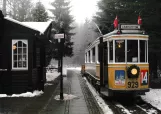
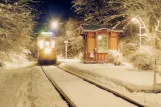
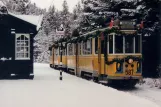
Postcard: Skjoldenæsholm standard gauge with railcar 327 at Flemmingsminde (2000)The tram museum is covered in a thick layer of snow.
Passing the Flemmingsminde stop with the old waiting room from Vester Kirkegårds Allé.By Henrik Boye, Sporvejshistorisk Selskab (SHS) - .
Postcard: Skjoldenæsholm standard gauge with railcar 470 at Eilers Eg (2000)Due to a shortage of vehicles during and immediately after the Second World War, Copenhagen Trams built a series of 44 two-axle motor cars and 65 similar sidecars—the so-called "scrap cars"—at its main workshop between 1942 and 1947. Motor car no. 470 was built in 1945, and sidecar no 1065 in 1947. They were in operation until 1967 and 1968, respectively.By Henrik Boye, Sporvejshistorisk Selskab (SHS) - .
Postcard: Skjoldenæsholm standard gauge with railcar 575 at Tobaksmarken (2000)In the years 1930-41, Copenhagen Trams and NESA were delivered a total of 118 motor cars and 83 side cars of a type designed by architect Ib Lunding. The very popular type of car was in traffic until 1972, when tram operations in Copenhagen ceased.
At the Skjoldenæsholm Tram Museum, three motor cars and five side cars of this type have been preserved. Among these are motor car no. 575 (KS 1938) and side car no. 1578 (KS 1941), which can be seen in the picture at the Tobeksmarken stop.By Henrik Boye, Sporvejshistorisk Selskab (SHS) - .
Postcard: Skjoldenæsholm standard gauge with railcar 587 at Eilers Eg (2000)At the Tram Museum's Christmas event, it is a tradition for line 0 to be put into service. In the years 1953-56, the line ran for a single day in December as a collection vehicle for the daily newspaper Social-Demokraten.
At the museum's terminus Eilers Eg, KS motor car no. 587 (KS' main workshop 1940) and sidecar no. 1552 (KS' main workshop 1934) can be seen.By Henrik Boye, Sporvejshistorisk Selskab (SHS) - .
Postcard: Skjoldenæsholm standard gauge with railcar 275 at Eilers Eg (1999)In 1999, the Tram Museum was able to put the loop at "Eilers Eg" into use, and thus the museum's 1.7 km long standard gauge section was completed. Motor car no. 275 Scandia 1907) is standing in the loop. The waiting room on the left in the picture comes from the Fruens Bøge terminus in Odense.By Henrik Boye, Sporvejshistorisk Selskab (SHS) - .
Postcard: Skjoldenæsholm standard gauge with sidecar 1460 near Skovkanten (1999)Railcar no. 437 (Scandia 1918) with sidecar no. 1460 (Scandia 1920) from Copenhagen Trams passes the picnic area in the middle of the Tram Museum's standard gauge section.By Henrik Boye, Sporvejshistorisk Selskab (SHS) - .
Postcard: Skjoldenæsholm standard gauge with railcar 12 by The Tram Museum (1998)Odense carriages at the Tram Museum forecourt. On the left, motor carriage no. 12 and open sidecar no. 51 from Odense Sporvej. Both were built by ASEA in Sweden in 1913 and 1911, respectively. The motor carriage was restored between 1987 and 1997 by members of the Tram Historical Society in Odense. On the right, bus no. 10 from Odense Bytrafik. The bus is a 1952 Volvo, the first model with an engine located under the floor.By Henrik Boye, Sporvejshistorisk Selskab (SHS) - .
Postcard: Skjoldenæsholm standard gauge with railcar 437 at Valby Gamle Remise (1998)The old Valby Remise from 1901 was rebuilt at the Tram Museum in the years 1995-98. In front of the depot is a train from Copenhagen Trams with motor car no. 437 and sidecar no. 1460. Both were built by Scandia in 1918 and 1920 respectively.By Henrik Boye, Sporvejshistorisk Selskab (SHS) - .
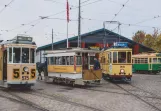
Postcard: Skjoldenæsholm standard gauge with railcar 437 The Tram Museum (1998)The forecourt of the tram museum with - from the left - carriages from the three Danish tram cities Copenhagen, Odense and Aarhus.By Henrik Boye, Sporvejshistorisk Selskab (SHS) - .
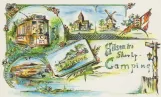
Postcard: Skjoldenæsholm standard gauge with railcar 275 (1995)Greetings from Skovly Camping
Skovly Camping. Ortved. 4100 Ringsted. Tel. 53 62 82 61.By Henrik Boye, Skovly Camping - .
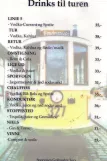
Menu card: Drinks for the trip (1990)LINE 5
-Vodka-Currant and Sprite 35,-
TOUR
-Vodka, Kahlua 38,-
RETURN
-Vodka, Kahlua and cream/milk 39,-
CHANGE
-Rum & Cola 33,-
STRAIGHT OUT
-Vodka & juice 33,-
TRAM
-Jægermester & red soda 31,-
DRIVER
-Vodka, Blå Bols and Sprite 35,-
CONDUCTOR
-Vodka, juice and red soda 36,-
Stop
-Tequila, juice and Grenadine 31,-
NIELS
-Gin & Tonic 31,-
VINNI
-Campari & soda 25,-
Sporvejen Gråbrødre TorvBy Henrik Boye, Sporvejen Burger Bar of the City - .
Postcard: Skjoldenæsholm standard gauge with railcar 327 on The tram museum (1990)Copenhagen Tramway's motor car no. 327 (Scandia 1912) and sidecar no. 1321 (Scandia 1914) on the Tram Museum's route.By Henrik Boye, Sporvejshistorisk Selskab (SHS) - .
Postcard: Skjoldenæsholm standard gauge with railcar 275 at Tobaksmarken (1985)First stop on the Tram Museum's new line for the Copenhagen trams. The stop, located approx. 350 m from the depot, is the temporary terminus on the line, which when fully extended will be approx. 1.5 km long. Copenhagen Trams' motor car no. 275 was built by Scandia in 1907 and rebuilt at the trams' main workshop in 1928.By Henrik Boye, Sporvejshistorisk Selskab (SHS) - .
Postcard: Skjoldenæsholm standard gauge with railcar 275 by The Tram Museum (1985)At the platform in front of and along the Tram Museum's depot, there is a transfer between the museum's two lines, one heading towards Højbjerg Skov and the other to the parking lot at Skjoldenæsvej. The trams shown in the picture are Copenhagen no. 275 (1907/1928), Basel no. 213 (1933), Aarhus no. 1 (1945), Copenhagen grinding trolley S 1 (1900/1952), and Aarhus sidecar no. 54 (1947).By Henrik Boye, Sporvejshistorisk Selskab (SHS) - .
Postcard: Skjoldenæsholm standard gauge with railcar 275 on The Tram Museum (1985)At the stop along the Tram Museum's depot, there is a departure for the museum's newest route, which is primarily served by carriages from Copenhagen. Copenhagen Trams' motor car no. 275 was built by Scandia in 1907 and rebuilt at the tramways' main workshop in 1928.By Henrik Boye, Sporvejshistorisk Selskab (SHS) - .
Postcard: Skjoldenæsholm standard gauge with railcar 470 The Tram Museum (1985)Tram museum forecourt with, among others, Copenhagen no. 470 (KS 1945), Copenhagen no. 275 (Scandia 1907), Basel no. 213 (SIG 1933), Aarhus no. 1 (KS 1945), Wuppertal no. 3241 (van der Zypen 1925) and Copenhagen no. 701 (KS 1949).By Henrik Boye, Sporvejshistorisk Selskab (SHS) - .
7:22
40 years ago - line 7 switches to bus operation (1971)What a great film, great pictures, but it always gives me a little stab in the heart when I see trams. Just think if they had preserved this form of transport and modernized the network, it wouldn't have been necessary to reinvent the wheel, as our current talk about light rail goes on a lot.By SporvognDK - .
8:36
Line 16 transitions to bus operation (1970)On 26 April 1970, the Copenhagen tram line 16 switched to bus operation.By SporvognDK - .