TRAM TRAVELS
Hovedlinie

Odense Hovedlinie: Fruens Bøge - Hunderup Skov

Closed

City: Odense (Denmark).
Total route length: 7.4 km (4.6 miles).

Track gauge: 1435 mm (standard gauge).
Opened: .
Closed: .

Lines in Odense

Select line type: Tram lines, and light rail lines.

Tram lines in Odense

HavnelinieOdense Havnelinie
Closed

HovedlinieOdense Hovedlinie: Fruens Bøge - Hunderup Skov
Closed

SkibhuslinieOdense Skibhuslinie: Frelsens Krog - Bøgebjergvej
Closed

Stops

Fruens BøgeHunderup SkovBanegårdenKlingenbergFrelsens KrogKongensgade.

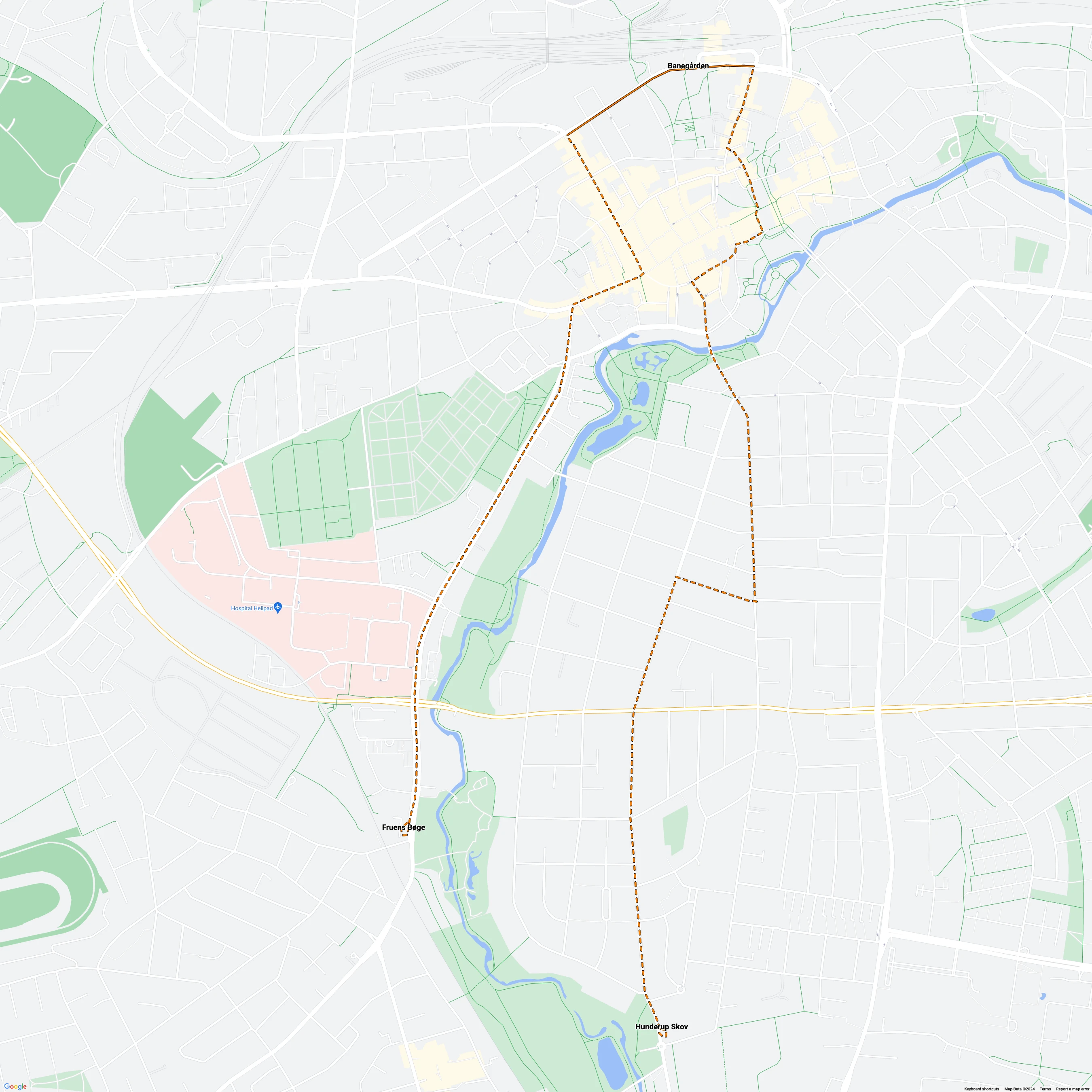
Odense Hovedlinie: Fruens Bøge - Hunderup Skov route map

View the route map in high resolution.

Photos and videos of Odense Hovedlinie: Fruens Bøge - Hunderup Skov
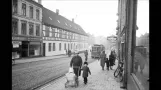
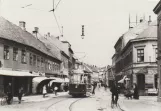
Odense Hovedlinie with railcar 17 on Nørregade (1940-1945)Added
Odense Hovedlinie with railcar 17 on Nørregade (1940-1945)By Michael Olsen.
- .
Inauguration of Odense Light Rail (2022)
19:50
Inauguration of Odense Light Rail (2022)Odense light rail was inaugurated on 28 May 2022, and the first train with passengers ran from the station called Parkering Odense Syd, which is located east of Hjallese. The Odense light rail was expected to open at the end of 2020, but the coronavirus and other longer-lasting issues were not in place. In contrast to the Aarhus light rail, the Odense light rail first waited for approval before announcing an opening date. And it must be said that it was a good solution, so that you did not end up with a cancellation at the last minute. In this film, we see clips from the opening day, information about the design, and a bit of history from Odense Sporveje. Today is May 28, 2022. I am at Hjallese Station, on my way to the Park & Ride facility south of Odense. I won a seat on Odense Letbane's first passenger train, which departs at 10:45 a.m. The trip is non-stop to Tarup, where the mayor and the Minister of Transport will board for the return trip. The first passenger light rail train left from the Odense Syd parking station, east of Hjallese. This station houses the light rail workshop, operated by Keolis, which also manages light rail in Odense and Aarhus. Odense light rail was scheduled to open at the end of 2020, but delays caused by the coronavirus and other long-term approvals pushed back the opening. Unlike Aarhus light rail, Odense waited for approval before announcing an opening date. This proved to be a good decision, preventing last-minute cancellations. At 10:20, the first light rail train in Odense arrived at the platform at the Park & Ride facility, ready to depart with passengers. - I recommend passengers stand up and hold onto the brackets and handrails until they get used to the train's rhythm. On the way to Tarup, I’ll share a little about the design of the new light rail. My name is Janik Frithioff, and I am a graphic designer at Odense Light Rail, where I have worked since 2017, contributing to station and train designs. We're here on train set number 01, named Brunneren. You can see it’s a very bright train with inviting colors, creating a cozy atmosphere, complemented by clear signage. This includes displays and signage along the train. The seats are made of cotton from Kvadrat in Ebeltoft, and the handrails are very visible, painted in subtle colors that won’t pollute the design. Several measures have been taken to make the train appear simple, inviting, and warm. The colors of Odense—sidewalks and buildings—are all warm tones, reflecting the city's palette. The color of our train represents Odense but is intentionally distinct from the cityscape. For blending in, darker colors are used, like the black overhead power poles, whereas the train's light color makes it stand out. We chose green for the emergency door opener—one of the few places in Denmark where this color is used to symbolize an emergency exit, aligning with requirements that emergency signs be green, even though German standards for train construction have red. We investigated and received approval to make it green, which indicates an emergency exit rather than a fire hazard. All communication in our trains and stations is in Danish and English. Our call center has a direct line to stations offering English translation. Signage and announcements are bilingual. The seats are soft and comfortable, unlike the hard seats found in metros or other transit modes. We prioritize quality to give citizens a better experience, even on short trips. We believe in providing high-class public transportation with comfortable seating, smooth rides, and an attractive visual environment. The trains also have large flex spaces for bicycles and strollers. Initially, these spaces were smaller, with a row of seats removed and replaced by foldable seats to increase capacity for bikes, wheelchairs, and prams. Then we arrived in Tarup Center, where many passengers were gathering for the first official train departure. Here, both the mayor and the Minister of Transport boarded for the return trip, with small inauguration ceremonies at each station, where ribbons were cut. At Albani Torv, many people waited for the first two trains arriving simultaneously. - It was fantastic. Lots of happy people. - Silent? - At least, there was only happiness. After that, the last ribbon was cut. And afterward, H.C. Andersen welcomed everyone to the City of Fairy Tales. In ancient fairy tales, the poet writes, "YES!" In millennia, they will come.By Kennys Film - .
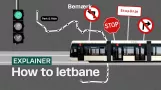
How to light rail: How to move safely around Odense's new road user (2022)
2:26
How to light rail: How to move safely around Odense's new road user (2022)What are the rules for the light rail? You probably want to avoid getting run over when you're on it. But have you completely gotten used to Odense's new traffic? Here are a few tips for staying safe on the light rail. The light rail in Odense will open on May 28, 2022, after the schedule has been delayed by 16 months. Are you excited? Journalist and organizer: Emilie Foxil Photographer: Lasse Beck Frost Editor: Sofie Dambæk Rasmussen __________________________________________________ Here are our most popular videos: MAGNUS AND AXEL: WHO KNOWS THE OTHER BEST? Is Aksel proud of Funen? And what does 'Magnus time' mean? • MAGNUS AND AXEL: WHO KNOWS THE OTHER BEST... DRIVING LICENSE CHEATING? "I was missing eight lessons" l The fraudulent driving instructors (1:2) l Note Documentary: • DRIVING LICENSE CHEATING? "I was missing eight lessons... Here are our most popular series: Nikolai chases playing time at Juventus • Series: On the team with Ronaldo - The dream of Ju... Caroline with Downs moves away from home • Series: Caroline moves away from home. Fyn pride with Futte Fynbo • FOOD FROM THE THOUGHT IS GOURMET! l Futte Fynbo a... Bemærk produces the videos under TV 2/Fyn. Bemærk is a news media. We produce journalistic content about life and everyday life on Funen. What you know, and what you don't know. Always from your perspective. We create news, features, and events centered around communities that put you at the heart. At Bemærk, you can always expect content for dialogue and debate. If you want to get involved, you are always welcome to contact us at bemærk@tv2fyn.dk or on one of our social media.By Bemærk - .
Johnny Wøllekær from the Stadsarkivet about the city's historical development (2022)
3:44
Johnny Wøllekær from the Stadsarkivet about the city's historical development (2022)City archivist Johnny Wøllekær talks about Odense's development from trams to motorway to light rail and urban transformation. Thanks to Historiens Hus for lending photos.By Odense Letbane - .
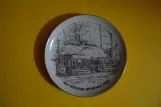
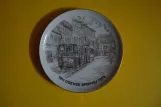
Decorative plate: Odense Hovedlinie with railcar 5 at Hunderup Skov (1974)Decorative plate: Odense Hovedlinie with railcar 5 at Hunderup Skov (1974)1911 Odense Tramway 1952By Henrik Boye, Skotman Jensen - .
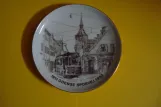
Decorative plate: Odense Hovedlinie with railcar 8 on Sankt Knuds Kirkestræde (1974)Decorative plate: Odense Hovedlinie with railcar 8 on Sankt Knuds Kirkestræde (1974)1911 Odense Tramway 1952By Henrik Boye, Skotman Jensen - .
Decorative plate: Odense Hovedlinie with sidecar 58 on Søndergade (1974)Decorative plate: Odense Hovedlinie with sidecar 58 on Søndergade (1974)1911 Odense Tramway 1952By Henrik Boye, Skotman Jensen - .
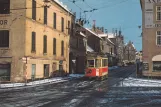
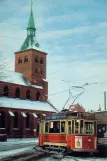
Postcard: Odense Hovedlinie with railcar 17 at Søndergade/Filosofgangen (1952)Postcard: Odense Hovedlinie with railcar 17 at Søndergade/Filosofgangen (1952)Sporvejshistorisk Selskab owns 1 railcar and two trailer loads from Odense.By Henrik Boye, Sporvejshistorisk Selskab (SHS) - .
Postcard: Odense Hovedlinie with railcar 4 on Skomagersstræde (1952)Postcard: Odense Hovedlinie with railcar 4 on Skomagersstræde (1952)A similar railcar (no. 12) owned by Tramway Historical Society.By Henrik Boye, Sporvejshistorisk Selskab (SHS) - .
Therefore the tram died (1952-2017)
6:31
Therefore the tram died (1952-2017)By fyens.dk.
- .
A trip with Odense's trams (1951)
13:51
A trip with Odense's trams (1951)Old houses in a historic neighborhood are known for one particular name. People from around the world visited Odense to see H.C. Andersen's home in Helsingør. Although it wasn't the most visited spot back then, occasionally a tour bus would pull up near the house, unloading a group of passengers. Visitors were often intrigued by the old house and surprised to see the chimney sweep, as featured in one of H.C. Andersen's famous stories. Maybe it wasn't just the atmosphere, but there was something adventurous about the place. To add to the sense of adventure, visitors could see the chimney sweep walking barefoot on the roof. Clearly, it was a place with something special to offer. But it wasn't always H.C. Andersen's house that drew people from near and far; sometimes, there was something else that attracted them. You see, Odense was a great city, much like other major Danish cities such as Copenhagen, with features that those cities typically had. The red trams, a color they adopted in the 1920s when they replaced the darker green models. Odense's main tram line opened in 1911. It started in Forsbury, passed through the city center, and ended at Hulopko. At each end of the line, there was a loop where the tram could turn around. The tram would arrive at the loop, make a high-pitched screech, and turn around to head back. On hot spring and summer days, the zoo and the surrounding trolley attracted many visitors, and the tram ride was just part of the experience. From Forsbury, the line ran along the green belt of Sonobat toward the city center. The next stop was the hospital, which saw many passengers during visiting hours. After a quick halt, the tram continued toward the next stop at Cassan, just a few hundred meters before Son Boulevard, in an effort to head down Sonale. Going through Vestigal, the tram entered busy city traffic, merging with other routes. Here, the tram line diverged onto double tracks, with a boulevard to continue toward the city center and Odense's main station. On summer days, it was common to see the regular tram replaced by open-air excursion wagons used for school trips, allowing children to enjoy the sights and sounds of the city from the comfort of a tram. Usually, these trips ended at the central station, with plans to continue the day, probably behind a real steam engine. Like everything else, Odense’s tram system required maintenance. The overhead wires at the old Central Station were being repaired, featuring the building's majestic style in the background. The tracks were greased, and occasionally, a welding crew came to fix the worn rails. After welding, the rails were ground to a smooth finish. The tram system was also a place where passengers were treated well and served with care. People would wave hats and greet friends and family before boarding. In America, there was another quick stop, passing the Hunob Scout tram, before continuing past Fisk and Finan's largest newspaper, the Fan Times. Then, it crossed between Nar and Vista, where traffic was so heavy it needed controls with lights. At Albani Torv, the tram was seen passing by, then turning past the city hall, which had been under construction for several years. From there, you entered the heart of the city. From this central area, people could switch to local buses or go shopping. One popular spot was the old market, where traditional practices thrived. For instance, you could taste the cucumber before buying it—nobody wanted a bad one. Markets were typically held at Albani Torv and Klingan Bear, where vendors sold flowers, vegetables, and fruits, creating a vibrant and authentic market atmosphere. All of this could be seen from the tram as it traveled past, with views behind the church and towering rooftops. The old gas tower was visible, and someday, this part of it would become history, along with a little red tram passing down Sus Kra, past Philosoph, and crossing over below onto Leel. This crossing required extreme caution. There was one final crossing with the tram at Munobsko before reaching the destination—Hunsko—where the tram ended in a loop in the forest. For a brief moment, passengers could enjoy the peaceful atmosphere. But then they arrived, and the journey came to an end. Here was Honors Go, welcoming the city's citizens with its green surroundings. Though most of Odense's rolling stock was scrapped in 1952 when the tram lines closed, one tram found a new lease on life. Number 12 was sold to the U.S. tramways in Sweden in 1945 along with a sister tram, number six. This particular tram survived after being purchased and was discovered in 1973 in a backyard in Sweden. A Swedish equivalent to the Danish Tramway Society was sent back to Denmark, and it was restored in 1997. The tram has been reintroduced to service and can now be seen alongside many other trams at the Danish Tramway Museum.By SJB Media 1996 - .
Postcard: Odense Hovedlinie with railcar 7 on Klaregadebroen (1951-1952)Postcard: Odense Hovedlinie with railcar 7 on Klaregadebroen (1951-1952)By Henrik Boye, Sporvejshistorisk Selskab (SHS).
- .
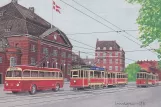
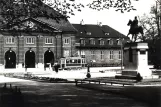
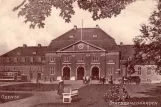
Postcard: Odense Hovedlinie with railcar 4 by Banegården (1949-1951)Postcard: Odense Hovedlinie with railcar 4 by Banegården (1949-1951)Skjoldenæsholm Tram Museum Trams and trolleybuses in front of the railway station in Odense, ca. 1950.By Henrik Boye, John Lundgren, Sporvejshistorisk Selskab (SHS) - - .
Cardboard tag: Odense Hovedlinie  at Banegården (1938)Cardboard tag: Odense Hovedlinie at Banegården (1938)Odense The City of National Conventions Andersen & Blæsbjeg Label no. 1701By Andersen & Blæsbjeg, Henrik Boye - .
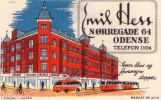
Cardboard tag: Odense Hovedlinie  near Banegården (1938)Cardboard tag: Odense Hovedlinie near Banegården (1938)Emil Hess Nørregade 64 Odense Phone 1104 -where Bus and Tram stop Sticker no. 3472 Østre StationsvejBy F.E.Borrding a/s KBHVN, Henrik Boye - .
Postcard: Odense Hovedlinie  by Banegården (1936)Postcard: Odense Hovedlinie by Banegården (1936)By Henrik Boye, Stenders Forlag.
.
Postcard: Odense Hovedlinie on Vestergade (1931)Postcard: Odense Hovedlinie on Vestergade (1931)By Danmarks Grafiske Museum, Henrik Boye, Møntergårdens billedsamling.
.
Archive photo: Odense Hovedlinie with railcar 14 at Banegården (1930-1939)Archive photo: Odense Hovedlinie with railcar 14 at Banegården (1930-1939)By Henrik Boye.
- .
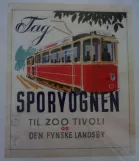
Poster: Odense Hovedlinie with railcar 15  (1930-1940)Poster: Odense Hovedlinie with railcar 15 (1930-1940)Take the Tram To Tivoli Zoo and The Funen VillageBy Henrik Boye, Odense Sporveje - - .
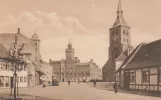
Postcard: Odense Hovedlinie  by Banegården (1912)Postcard: Odense Hovedlinie by Banegården (1912)Odense. State Railways. Universal Postal Union (Union postale universelie) Postcard - Carte PostaleBy H. Schmidt Fot. Lideallé, Henrik Boye - .
Odense in the old days (1911-1952)
3:31
Odense in the old days (1911-1952)By Claus Frandsen.
- .
Odense Sporveje 100 years (1911-2011)
27:47
Odense Sporveje 100 years (1911-2011)On October 5, 1911, A/S Odense Elektriske Sporvej began operations. On the same day, the old Odense tram will leave from the Sporvejsmuseet to Flakhaven in Odense and will be on display at Denmark's Railway Museum for the rest of October. The fifth of October — is it exactly 100 years since the Odense Electric Tramway Company began operating its first track? And on this centennial, October 5th, can you see the old Odense track, now at the Gedsholm Tramway Museum in front of Odense City Hall, just as it appeared when first shown to the public on September 12, 1997, after being fully renovated from October 6 through the rest of the month? Can you view the track at the Danish Railway Museum, which currently hosts an exhibition about modern trams and light rail, now making their way back to Denmark's three historic tramway cities: Odense, Copenhagen, and Aarhus? If anyone knows the history of the Odense Tramway, it's Ole Iskov. His father worked for the Odense Tramway Company, and his deep interest in tramways stems from a lifelong fascination. Ole Esgaard authored a book about the Odense Tramway, published by the Tramway Historical Society in 1986. You're mentioned in the foreword of that book. The American author Ray Bradbury’s book, "Dandelion Wine," features a main character, Douglas, who at 12 years old experiences something about the tramway in his hometown in the USA. Why did you mention that book? I can't help but compare it to myself. I was also me—I was 14 when they closed the Odense tramway—and I feel the same way as Douglas in "Dandelion Wine," which isn’t a science fiction book, unlike Bradbury’s usual style. He says something like, "The nice carriage driver comes and drives his tram and says, Hey kids, hop in—it's free today. It’s the last day," Douglas says, "the last day." They can't do that forever—he’d driven the tram his whole life, knew its sounds, its smell, and so on. And I think the same thing happened to me, too. When I arrived in Odense in 1950 and worked with the tramway for two and a half years, I always knew it was going to close—a beautiful day. But it wasn’t until July 1, 1952, when I saw all the carriages idle in Sønderborg, that it really hit me—no more trams. It was serious. Never again. And what strikes me is that the same thing happens again in R. Bredberg’s book. I moved from Svendborg to Odense in January 1950 because my father, a machinist at Svendborg Municipal Electricity Company, was hired as a foreman at Odense Tramway. He was trained as a machinist and apprenticed with Thomas B. Trige before attending the Mechanical Engineering School. He knew Thomas B. Trige, and apprentices usually received a few kind words from him when they became "Svenne." So, my father attended the Mechanical Engineering School and became a machinist, working alongside an electrical installer. He also worked with AP Møller for a few years in the 1930s, including on the tanker Jan Mærk. Mærk came ashore before the war and was employed by the Copenhagen Lighting Service, working at HC Ørstedsværket and the good damage repair shop. My father also chose his predecessor, the old post foreman Andersen, a trained machinist. That’s why it felt right for me to come to Odense, just like Odense's tracks. Even though I knew from the newspapers that it was going to shut down, I already had a slight interest in the trams of Copenhagen. I was born in Copenhagen and lived on line five, which was the last tram line there, so I had it in my blood. The first time I was with my father in the depot, I saw all the trams—it was truly exciting. They were mostly out and running, but some remained in the depot. Strangely, I even got a greeting from the depot director that day. He thought it was fun to walk around and see what kind of kids were in the depot. He was always kind. I’d previously gone for a ride in Odense and was very excited. The trams I saw were red and blue. I was used to the yellow ones in Copenhagen. It was fortunate that my father's face meant we kids got free passes—though only on school days or weekdays, not on weekends, holidays, or evenings. But when the trams finally ran, I gradually learned all the motor cars—and I remember every single one. Number 12 was one of them, sold to Uppsala in 1945, along with number six. I knew many drivers—I eagerly stood close to them—and even many conductors, though I'm not sure they all knew me. I was a shy boy, after all. But the conductors were nice, and I always enjoyed my rides.By SporvognDK - - .
Postcard: Odense Hovedlinie  at Klingenberg (1911-1913)Postcard: Odense Hovedlinie at Klingenberg (1911-1913)By Henrik Boye, Stenders Forlag.
- .
Postcard: Odense Hovedlinie with railcar 1 on Vestergade (1911)Postcard: Odense Hovedlinie with railcar 1 on Vestergade (1911)By Henrik Boye, Sporvejshistorisk Selskab (SHS).
.
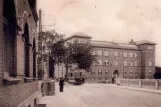
Postcard: Odense Hovedlinie  on Hunderupvej (1900-1915)Postcard: Odense Hovedlinie on Hunderupvej (1900-1915)Odense - Technical SchoolBy Henrik Boye, Kull - - .

Add a comment

Last updated: .