TRAM TRAVELS
5

Mannheim regional line 5

Operational

Earlier: Mannheim regional line A.
Earlier: Mannheim regional line 5 R.

City: Heidelberg, Mannheim (Germany).
Total route length: 56.8 km (35.3 miles).
Driving time: 127 min.

Track gauge: 1000 mm (metre gauge).
Opened: .

Description

(Oberrheinische Eisenbahn-Gesellschaft - OEG)

Lines in Mannheim

Select line type: Tram lines, extra lines, extra regional lines, fast lines, regional lines, and restaurant lines.

Regional lines in Mannheim

4Mannheim Rhein-Haardtbahn 4: Waldfriedhof - Bahnhof
Operational

4aMannheim regional line 4A
Operational

5Mannheim regional line 5
Operational

5aMannheim regional line 5A
Operational

Stops

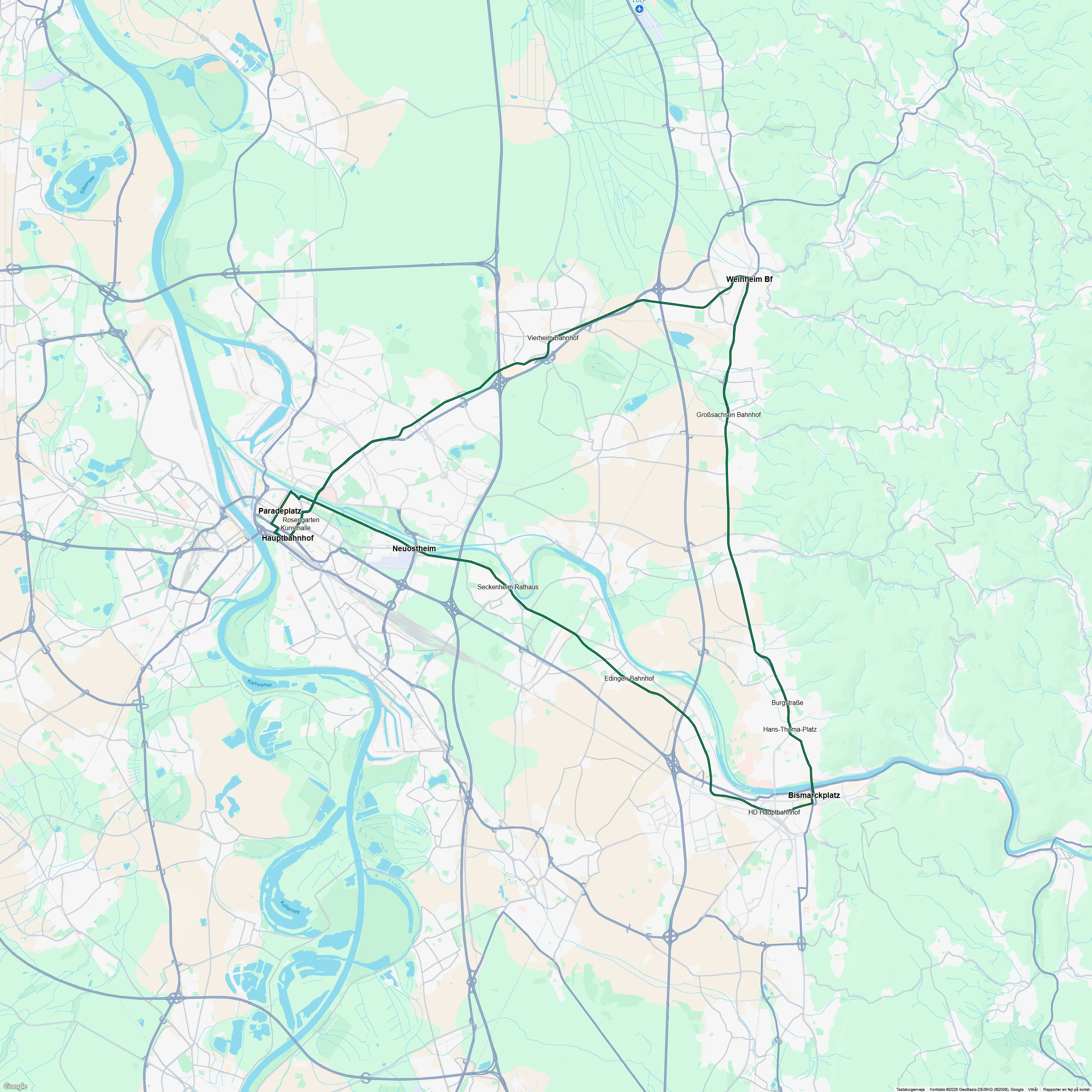
HauptbahnhofWeinheim HauptbahnhofBismarckplatzKunsthalleViernheim BahnhofEdingen BahnhofRosengartenBurgstraßeSeckenheim RathausGroßsachsen BahnhofHans-Thoma-PlatzHD HauptbahnhofWasserturmParadeplatzNeuostheim.

Mannheim regional line 5 route map

View the route map in high resolution.

Photos and videos of Mannheim regional line 5
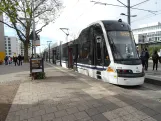
The world's longest tram is now running in Mannheim | Skoda 38T (2025)
8:47
The world's longest tram is now running in Mannheim | Skoda 38T (2025)Since the beginning of April 2025, the world's longest trams, measuring approximately 60 meters in length, have been operating in Germany, specifically in Mannheim. The Type 38T vehicles, built by Skoda, are 58.69 meters long, to be exact. With this length, they have overtaken the previous record holder, the Urbos 100 in Budapest, by nearly 1.8 meters. However, with a total of eight trams, they seem slightly longer. The Rheinck tram 2020 vehicles have been running in the Reincker region for over two years now. In April 2023, the three-car, 30-meter-long Type 36T vehicles began regular service for the first time. Nearly a year later, the 40-meter-long, four-car Tube 37T vehicles followed. And now, the 58.6-meter-long Type 38T vehicles are also in regular service through Mannheim. The 60-meter-long vehicles were unveiled at a press event at the Reinecker Verkehrsgesellschaft depot in Mannheim in September 2024, where their features and advantages were demonstrated. It was also announced that they would start regular service by the end of 2024. However, this was significantly delayed, and it was not until four months later, after numerous test runs and training sessions, that they finally entered regular service. In the initial weeks, they were primarily used on Tram Line 1. They can now also be found on tram line 5 and other routes. A total of 12 of the approximately 60-meter-long Type 38K vehicles have been ordered. Currently, four of these vehicles are approved for passenger service, but the delivery process for all 12 is still ongoing. Essentially, the Escoda 38Ts are very similar to their shorter counterparts, the Tys 37 and 36T. This similarity begins with the vehicle design. The Tys 38T vehicles feature the same rounded front, with a large, curved windshield and a wind-resistant design, similar to the other two types. An integrated large passenger information display is located in the windscreen. The front and rear lights are arranged in two narrow decorative stripes with a black background. The rest of the front maintains a black-and-white color scheme. The side design closely follows that of the earlier models, featuring one double door per car, and the same color scheme, which includes a large black window band with white sections above and below. A blue decorative stripe runs along the underside. The main difference is that these vehicles have six double doors per side and consist of six cars. A notable feature connecting the six cars is the large folding beam located in the middle of the vehicle, specifically between cars 3 and 4, which allows for easy separation. The three vehicles are delivered separately and assembled into a 60-meter tram later, simplifying maintenance in the depot. This design option is also available in the four-car models. Another key point is that the vehicles operate with two pantographs during regular service. To make boarding easier visually for passengers, the doors are marked with LED strips that light up green when the doors are released for opening and flash red when closing. Most importantly, the 60-meter-long trams offer ample interior space, which is why they are used on lines 1 and 5, where demand is particularly high. These vehicles can accommodate nearly 400 passengers, with seating for 156, some of which are upholstered and quite comfortable. However, some seats feature a wood-effect finish, which is somewhat more elaborate. Additionally, according to the manufacturer, the venue has standing room for 212 people. There are also several multi-passenger areas distributed throughout the vehicle. There are four of these, located at four of the six tram entrances. Otherwise, the interior naturally features the same equipment as the Type 37 and 36T vehicles. For example, large passenger information displays show the upcoming stops and interchange options.By Bahnwelten - .
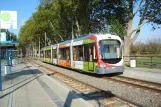
Mannheim regional line 5 with low-floor articulated tram 1816 at HD Hauptbahnhof (2024)Mannheim regional line 5 with low-floor articulated tram 1816 at HD Hauptbahnhof (2024)By Henrik Boye.
.
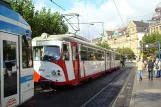
Mannheim regional line 5 with low-floor articulated tram 3278 on Bismarckplatz (2024)Mannheim regional line 5 with low-floor articulated tram 3278 on Bismarckplatz (2024)By Henrik Boye.
.
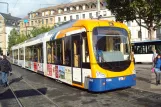
Mannheim regional line 5 with low-floor articulated tram 3281 at Hans-Thoma-Platz (2024)Mannheim regional line 5 with low-floor articulated tram 3281 at Hans-Thoma-Platz (2024)By Henrik Boye.
.
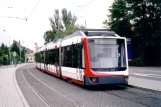
Mannheim regional line 5 with low-floor articulated tram 4123 at Burgstraße (2024)Mannheim regional line 5 with low-floor articulated tram 4123 at Burgstraße (2024)By Henrik Boye.
.
Heidelberg regional line 5 with low-floor articulated tram 4134 at Bismarckplatz (2019)Heidelberg regional line 5 with low-floor articulated tram 4134 at Bismarckplatz (2019)By Silas Boye Nissen.
.
RNV: How to change trains at Heidelberg's Bismarckplatz without barriers (2014)
3:18
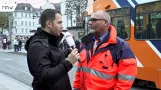
RNV: How to change trains at Heidelberg's Bismarckplatz without barriers (2014)Thirty-seven thousand people get on and off here at Heidelberg's Bismarckplatz every day. For many of them, using the barrier-free platforms is very important. The square was completely rebuilt in 2011. To maintain the level ground of the square, all elevated platforms were removed, and so-called platforms were built in their place. The RNV has been receiving numerous inquiries recently, as using the platforms involves some special features that must be taken into consideration. With me today is team leader Rüdiger Schock from RNV. Hello, Mr. Schock. The fact is, we have different types of vehicles here, which is why the stopping positions vary. Perhaps you could explain that briefly. Yes, we have different types of cars in Heidelberg, as you already mentioned, and I classify them into four categories. Due to their length and design, not all trains can stop at the same position, as this would compromise accessibility. This means that each vehicle must have its own designated stopping point. How is this regulated in Heidelberg? It's very simply managed with a straightforward method. We have placed track nails as markers on the track area. This allows the driver of a specific type of vehicle to know exactly where to stop with a particular wheel position, ensuring barrier-free boarding. One type of vehicle that is special is the one on line 5. You are somewhat dependent on passenger assistance there. Can you explain that briefly? On Bergstrasse, we have installed high curbs on almost everything. This means passengers can board anywhere in the middle without barriers, but cannot get out a little further behind because Malor Hill is in front. The simplest solution, which mainly relies on passenger assistance, is for them to always board at the first door in the direction of travel. To ensure accessibility, a wheelchair door is available and should be used. This allows passengers to alight barrier-free at Bismarckplatz, which is now a major stop. It's busy, with five tram lines running here alone, so two trams can stop one behind the other. Since there isn't a platform at the back, what do passengers do if a tram is at the rear and they want to board or alight? Do they need accessibility features? We've given the drivers instructions, and we strictly follow and monitor these. They must stop in the correct position at least once while changing passengers to ensure accessibility here as well. This means I can always stand here if the train has already opened at the back. If needed, it will pull up again and reopen at the front. It should always do so. We continue to train staff and ensure this process remains consistent. Yes, thank you very much for the answers. No problem; I was happy to help. After all, we want everyone to feel comfortable when traveling, whether for themselves or our customers. RNV is making an effort. There are stopping positions at Bismarckplatz that require each vehicle type to stop at a specific spot, ensuring the door aligns with the platform. If you are a mobility-impaired passenger traveling on RNV trains and want to get off at Bismarckplatz, it's best to look for the first door in the direction of travel with the wheelchair symbol, as this ensures you can get off at the platform.By Rhein-Neckar-Verkehr GmbH (rnv) - .
RNV Line 5 Circuit 8 (2012)
13:29
RNV Line 5 Circuit 8 (2012)Paradepl. - Duale Hochschule. Info: I have the video without sound because there was too much background noise in the recording!By Peter's Videoecke - .
Trams in Mannheim (2011)
4:04
Trams in Mannheim (2011)Trams on the station forecourt of Mannheim main station. Vehicles of the types: RNV8ER (Variobahn) and RNV6ZR.By leeseisenbahnen - .
Heidelberg regional line 5 with articulated tram 4101 at Seckenheim Rathaus (2009)Heidelberg regional line 5 with articulated tram 4101 at Seckenheim Rathaus (2009)By Henrik Boye.
.
Mannheim regional line 5 with low-floor articulated tram 4127 at Neuostheim (2009)Mannheim regional line 5 with low-floor articulated tram 4127 at Neuostheim (2009)By Henrik Boye.
.
Heidelberg regional line 5 with articulated tram 4109 at Bismarckplatz (2009)Heidelberg regional line 5 with articulated tram 4109 at Bismarckplatz (2009)By Henrik Boye.
.
Heidelberg regional line 5 with low-floor articulated tram 4140 at Bismarckplatz (2009)Heidelberg regional line 5 with low-floor articulated tram 4140 at Bismarckplatz (2009)By Henrik Boye.
.
Mannheim regional line 5 with low-floor articulated tram 4131 at Hauptbahnhof (2009)Mannheim regional line 5 with low-floor articulated tram 4131 at Hauptbahnhof (2009)By Silas Boye Nissen.
.
Heidelberg regional line 5  near Großsachsen Bahnhof (2003)Heidelberg regional line 5 near Großsachsen Bahnhof (2003)Articulated tram is on the road to traffic. Landstraße.By Henrik Boye - .
Heidelberg regional line 5 with low-floor articulated tram 118 at Burgstraße (2003)Heidelberg regional line 5 with low-floor articulated tram 118 at Burgstraße (2003)By Henrik Boye.
.
Mannheim regional line 5 with articulated tram 87 at Rosengarten (2003)Mannheim regional line 5 with articulated tram 87 at Rosengarten (2003)By Henrik Boye.
.
Mannheim tram line 6 with articulated tram 521 at Kunsthalle (2003)Mannheim tram line 6 with articulated tram 521 at Kunsthalle (2003)By Henrik Boye.
.
Heidelberg regional line 5  at Bismarckplatz (2001)Heidelberg regional line 5 at Bismarckplatz (2001)By Henrik Boye.
.
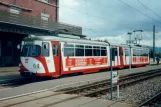
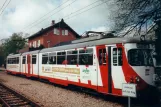
Heidelberg regional line 5 with articulated tram 106 at Edingen Bahnhof (1998)Heidelberg regional line 5 with articulated tram 106 at Edingen Bahnhof (1998)By Henrik Boye.
.
Heidelberg regional line 5 with articulated tram 107 at Vierheim Bahnhof (1998)Heidelberg regional line 5 with articulated tram 107 at Vierheim Bahnhof (1998)By Henrik Boye.
.
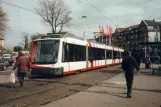
Heidelberg regional line 5 with low-floor articulated tram 119 at Bismarckplatz (1998)Heidelberg regional line 5 with low-floor articulated tram 119 at Bismarckplatz (1998)By Henrik Boye.
.
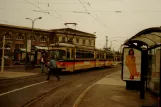
Mannheim regional line 5  on Kaiserring (1990)Mannheim regional line 5 on Kaiserring (1990)By Henrik Boye.
.
Mannheim regional line 5 with articulated tram 103 at Hauptbahnhof (1990)Mannheim regional line 5 with articulated tram 103 at Hauptbahnhof (1990)By Henrik Boye.
.

Add a comment

Last updated: .