A visit to the City Transport Museum Mödling, Lower Austria (2023)
AddedMuseum: Mödlinger Stadtverkehrsmuseum.
YouTube name: Trainspotting in Austria.
Date: .
City: Mödling (Austria).
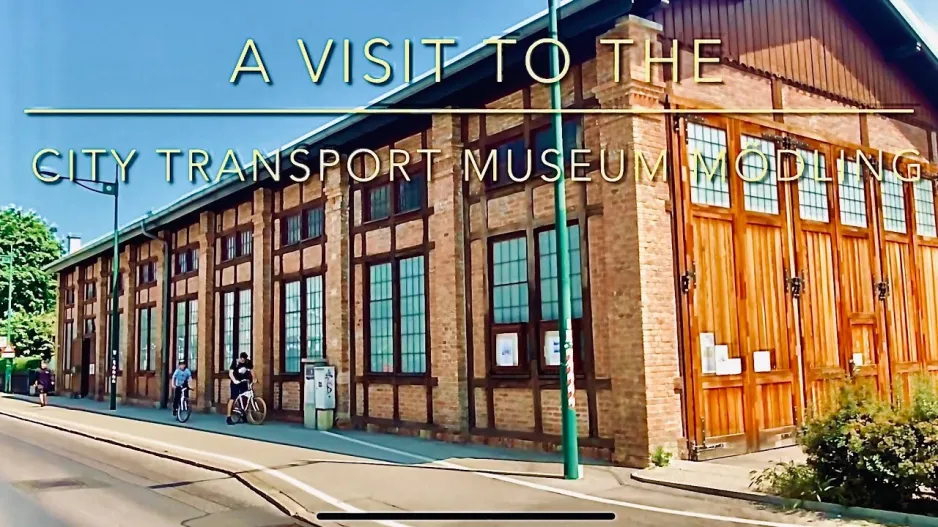
Mödlinger Stadtverkehrsmuseum
Open regularly
In 1903, the Hinterbrühler Electric was extensively reconstructed. This also went hand in hand with the conversion or new construction of the station facilities. For ten new (“big”) motor cars to be procured, a three-track new depot (“big depot”) had to be added to the old buildings. This hall was placed directly on Bahnstraße, today's Tamussino Street.
After the end of the railway, the motor cars remained in the hall for another seven years before they were transported away in the Third Reich. From then on, the depot facilities and with them the large hall were used by third parties. The Anton Wolf company stored their animal feed here for many years.
 Nevertheless, the valuable area near the train station deteriorated more and more after the war and at the beginning of the 80s of the last century was what is known in good Viennese as a "Gstettn". Of course, this had to prompt the municipality to consider clearing the entire area, including the now sanded buildings, and building a large, modern park-and-ride facility.
In the midst of these increasingly concrete plans came the year 1983, the centenary of the opening of the Hinterbrühlerbahn. A beautiful exhibition in the district museum of Mödling reminded us of this, and so the mayor of Mödling at the time, Werner Burg, thought of creating a museum of its own for the historic Mödling local transport system. And what could be more obvious than to plan the large carriage hall for this purpose. This generated headwind, because the proponents of parking wanted to use the ENTIRE site for the new facility.
The following compromise was found: The "big" hall would remain and the rear half of the hall would be kept ready for a museum. In the front half, the municipal utility yard would store “parts” (= junk). A partition wall was built and a historic ÖBB bus was placed in the back half of the hall. But soon the rear half of the hall was also "filled" and so the matter of "local transport museum" was put on hold until 1987.
When it was 1987 for the first meeting of Dr. Standenat with the then city councilor Werner Burg, the project "Nahverkehrmuseum" received new impetus. An "original 360" would be a great asset for the museum of the future. After the then mayor Lowatschek had also agreed, the project could definitely be tackled.
The museum business
has functioned to this day as a kind of "joint venture" between the municipality of Mödling and the Mödling City Transport Museum association, which was founded in 1988.
You have to know all this in order to be able to understand today's museum operations. Supported by the community, we are just a small group of activists. The vehicle renovation that we carried out on our own and at our own expense required great financial sacrifices. When it comes to modern technical means of design, things are rather modest in our museum. Above all, we rely on information in words and pictures and on the authentic experience. For example, entering all historic passenger cars is PERMITTED, as is free photography.
Our museum shop offers relevant literature, most of which was written by our members.
Since it is not possible to heat the very high hall, we can only keep it open seasonally. We have been open again for you since April 16th!
Important information in brief:
Mödling City Transport Museum
Tamussino Street 3
2340 Modling